
Planning & progress
Full-body and split routines: the scheduling difference
Full-body and split routines organise a week's work differently. Their names tell you less than the number of appointments and the work assigned to each one.
Read article27 ARTICLES
Build a training routine you can follow and keep track of.
Full-body and split routines organise a week's work differently. Their names tell you less than the number of appointments and the work assigned to each one.
Read article
A shorter workout needs a smaller scope. Trying to fit the full session into half the time usually changes more than the clock.
Read article
An occupied machine is a routine gym problem. A small amount of planning keeps it from becoming an improvised workout.
Read article
If everything changes together, the training log cannot tell you which change mattered.
Read article
The load column is useful, but it cannot describe everything that improves as you learn to train.
Read article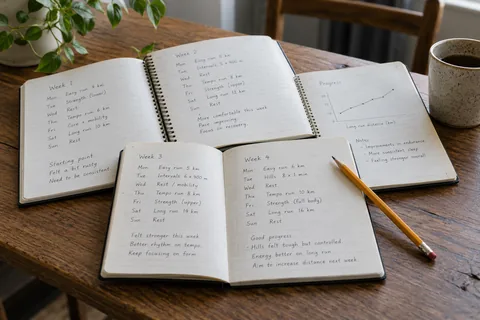
Several weeks of entries can show a pattern that a single good or bad session cannot. Start by checking whether the entries describe comparable work.
Read article
An exercise name should lead you back to the same movement and equipment, without a guessing game beside the rack.
Read article
Putting aerobic activity and strength training in the same week is partly a scheduling problem. Begin with your available time and the purpose of each appointment.
Read article
A changing rota needs a planning method that can move. Fixed weekday labels may be less useful than a clear sequence and realistic appointment windows.
Read article
Two people can share an appointment without following identical exercises, loads or rest periods.
Read article