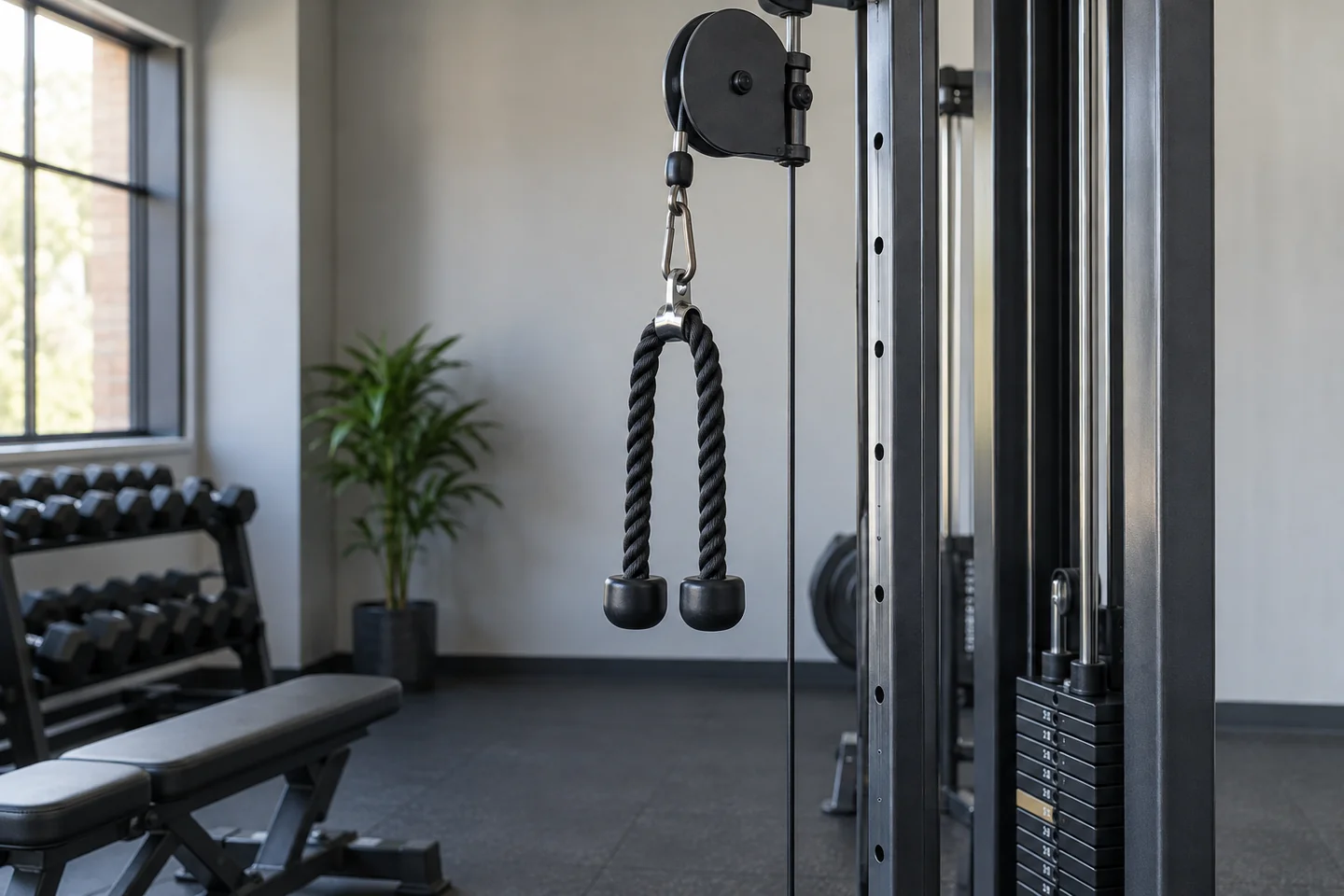
Fit the attachment before selecting the challenge
Use the high-pulley position specified for the exercise and an approved bar or rope attachment. Check the connector and let the stack rest before making changes. A rope and straight bar offer different hand positions, so choose the one you have been shown rather than switching halfway through a set.
Stand where the cable can travel freely and the attachment can move without hitting your thighs prematurely. Take a stable stance with enough room that someone passing behind you will not cross the movement. Start with a light resistance. You should be able to establish the bent-elbow position without pulling your whole body down against the cable.
Keep the upper arms near the sides in a comfortable position and straighten the elbows to move the attachment down. Return smoothly rather than letting the cable yank the hands upwards. A small natural movement is different from repeatedly swinging the shoulders to get the handle moving. If the torso begins dropping onto the attachment, reduce the load and reset.
Make the end position comfortable
With a rope, the hands may separate slightly near the bottom if that is the version you are practising. Do not force an exaggerated split or turn the wrists sharply to imitate a demonstration. With a bar, check that the fixed angle feels comfortable. A different attachment can be sensible if the grip itself is the problem.
Straightening the elbow does not require slamming into the end of its range. Keep the finish controlled and allow the return to be part of the repetition. If the stack repeatedly crashes down, slow the return and reassess the amount of resistance.
Some cable stations need a different attachment length to provide enough usable travel. If the cable stop reaches the pulley before your intended movement is complete, ask staff about the correct setup. Do not add random chains or clips to extend it yourself.
Know where you will release it
The last return should bring the resistance gently to rest. Release the attachment only when it is settled, keeping the hands away from the pulley. If you have stepped back during the set, return deliberately rather than letting the cable pull you forwards.
Check whether the attachment swings when you finish. If it would enter the space of the next cable station, guide it to rest as the machine permits rather than releasing it from a distance. Shared cable areas often have overlapping movement zones. Leave the attachment in the gym's designated resting or storage position so the next user can identify it and check the connector without reaching around a hanging load.
Write down the pulley setting and handle type if you track the exercise. A change from a rope to a short bar can alter the movement enough that the same stack number feels different. The setup details explain that difference better than assuming you have suddenly become stronger or weaker between stations.