Identify which row you are using
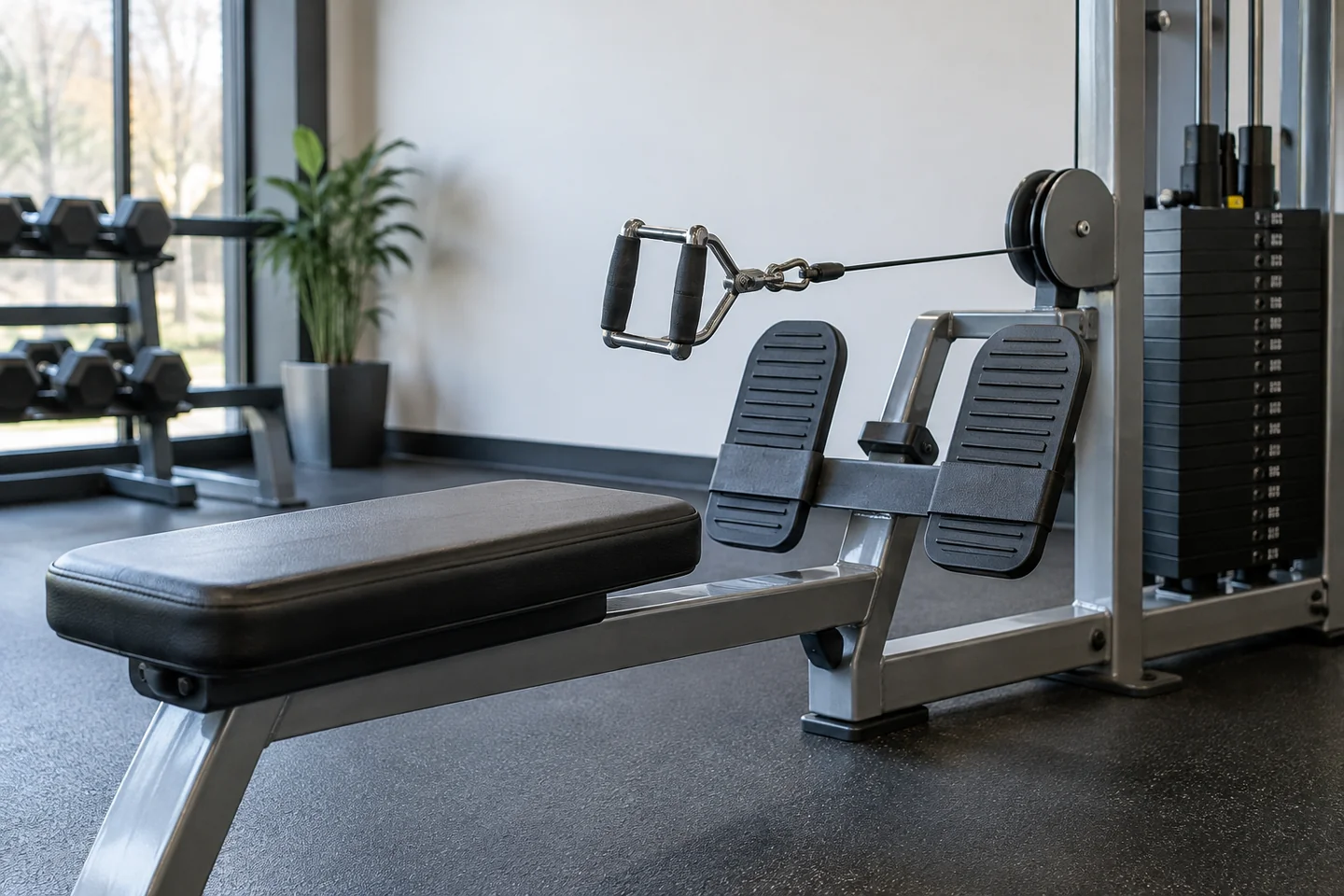
A cable row with a bench and footplates differs from a machine with a chest pad and moving arms. Read the diagram for the model in front of you. On a chest-supported machine, seat and pad positions determine your reach; on a low cable station, your position on the bench and the handle length matter more. Ask staff to demonstrate the entry if it is unfamiliar.
Set a light trial resistance and place the feet securely on the intended supports. Keep a comfortable bend in the knees rather than locking them rigidly. Take the handle using the approach you have been shown, establish the seated position and check that the cable has a clear path. Loose clothing, a towel or a bag should not be near the moving cable.
If the handle is too far away to collect comfortably, do not solve the problem by lunging forwards with a heavy stack selected. Ask whether the machine has a start-position aid or a more suitable attachment. The exercise should begin from a position you can enter without an improvised tug.
Make the pull distinct from a body swing
Draw the handle towards the torso in the intended path, then let the arms return under control. Avoid using a large backward lean to finish every repetition. Some movement of the shoulder blades is part of rowing; the aim is not to freeze every part of the upper body. The useful distinction is between a controlled arm-and-shoulder movement and throwing the torso to move the stack.
Handle shape changes where the hands meet the body. A wide bar and a close neutral handle may need different clearance and a slightly different finishing position. Do not force both to touch the exact same point. If the attachment hits your body before a comfortable movement is complete, ask whether it suits the exercise you intended.
Keep the return smooth. Allowing the cable to pull you suddenly towards the stack makes it harder to maintain the seated position. A light load gives you time to notice the point where you are reaching comfortably rather than stretching for another inch.
Leave enough room to finish
Before releasing the handle, return the resistance to rest as instructed for the machine. Do not drop the attachment and let it snap back towards the pulley. Make sure your feet and hands are clear of the mechanism before standing.
If the station is part of a shared cable area, check whether another user needs the same space. A long handle can extend into a walkway even when the seat itself does not. Keeping the route clear makes both the exercise and the transition afterwards less awkward. Remember the attachment as well as the weight in your notes; it is part of what made the row feel the way it did.