Look beyond the label
Two seated rows can differ in handle position, chest support, lever length and cable routing. Two leg presses may place you at different angles or move a different part of the machine. Even when both stacks use kilograms, the resistance experienced through the movement need not match exactly.
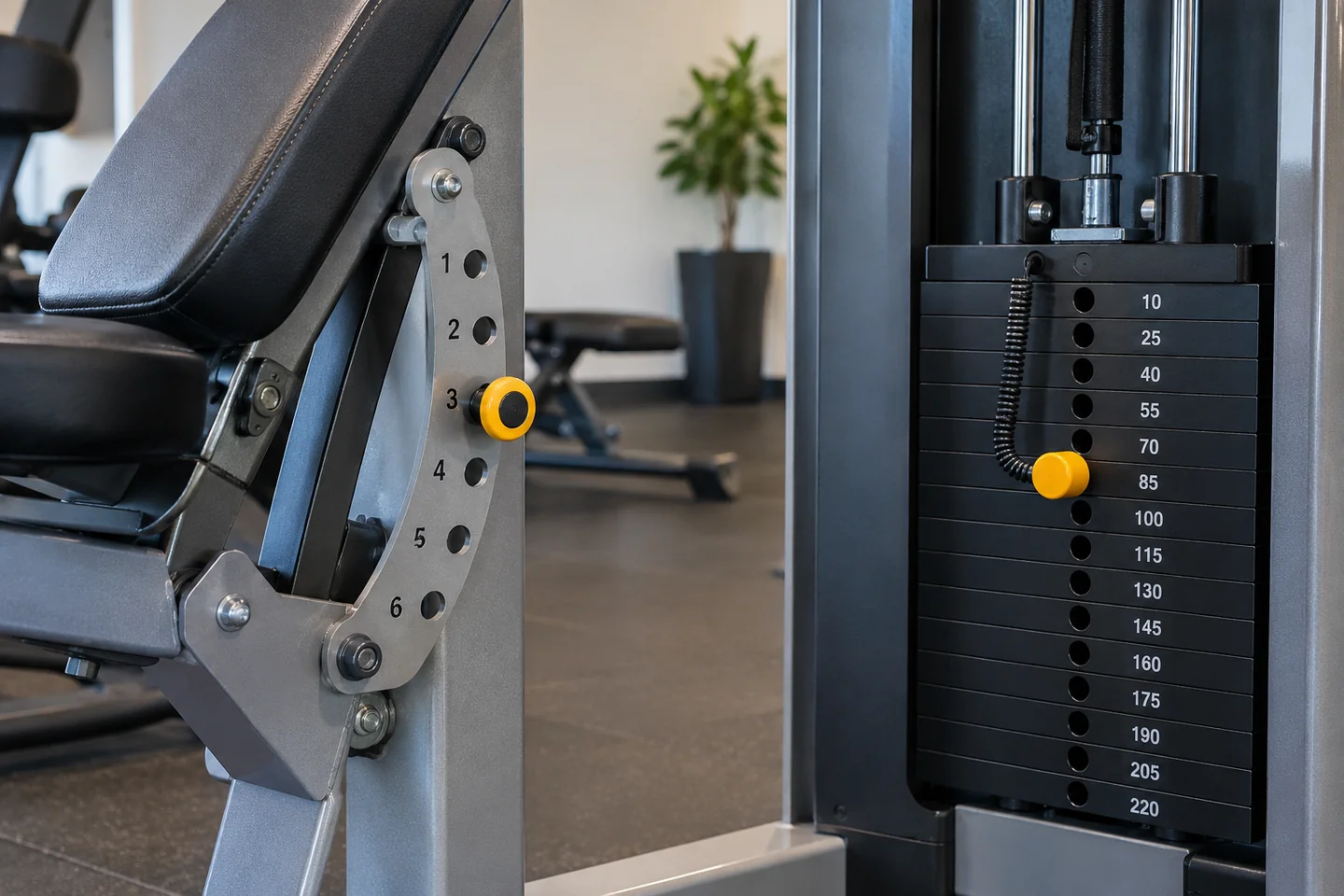
Treat the new machine as new equipment. Read its diagram, identify the adjustments and ask for a demonstration of any release or stop mechanism. Do not begin by selecting the number you remember from the old station. Choose a light trial that lets you understand the path and return.
The seat number is also local to the machine. Position three may be comfortable on one model and unsuitable on another. Find the intended alignment of the pads, handles and your body before thinking about how the exercise compares with last week's session.
Compare what you can observe
Notice whether the starting reach is longer, the pad is firmer or the movement becomes harder in a different part of the range. These are useful observations to record. They do not require an immediate conclusion that you have lost strength or that one machine is inaccurate.
Some machines have separate left and right arms; others link both sides. Some cables use a single pulley and others a different arrangement. You do not need to calculate every mechanical ratio to use the equipment, but you should avoid pretending that the displayed numbers are perfectly interchangeable.
If the new setup cannot be made comfortable, another station may be more suitable. A familiar exercise name is not a reason to tolerate a pad that presses awkwardly or a handle you cannot reach. Ask staff whether an adjustment has been missed before deciding the whole movement is unsuitable.
Keep two records when necessary
If you regularly use both machines, label them separately in your notes. A model name, location or clear description will do. Record the relevant settings for each. Over time, comparisons within the same setup will be more meaningful than trying to convert one machine's stack into the other's.
When asking staff for help, name the difference you noticed rather than asking which machine is correct. You might say that one row brings the handle much closer before the stack rests, or that one press has a different seat angle. They can explain the design and intended setup. Keep those notes separate from a judgement about your performance; a new piece of equipment can require learning even when the movement category is familiar.
You can still recognise progress in becoming more confident with the new controls, finding a repeatable range and completing the intended movement smoothly. Those observations are available before a load comparison becomes useful. The first visit to another machine is an equipment-learning session as well as a training session, and treating it that way removes the pressure to reproduce an arbitrary number immediately.