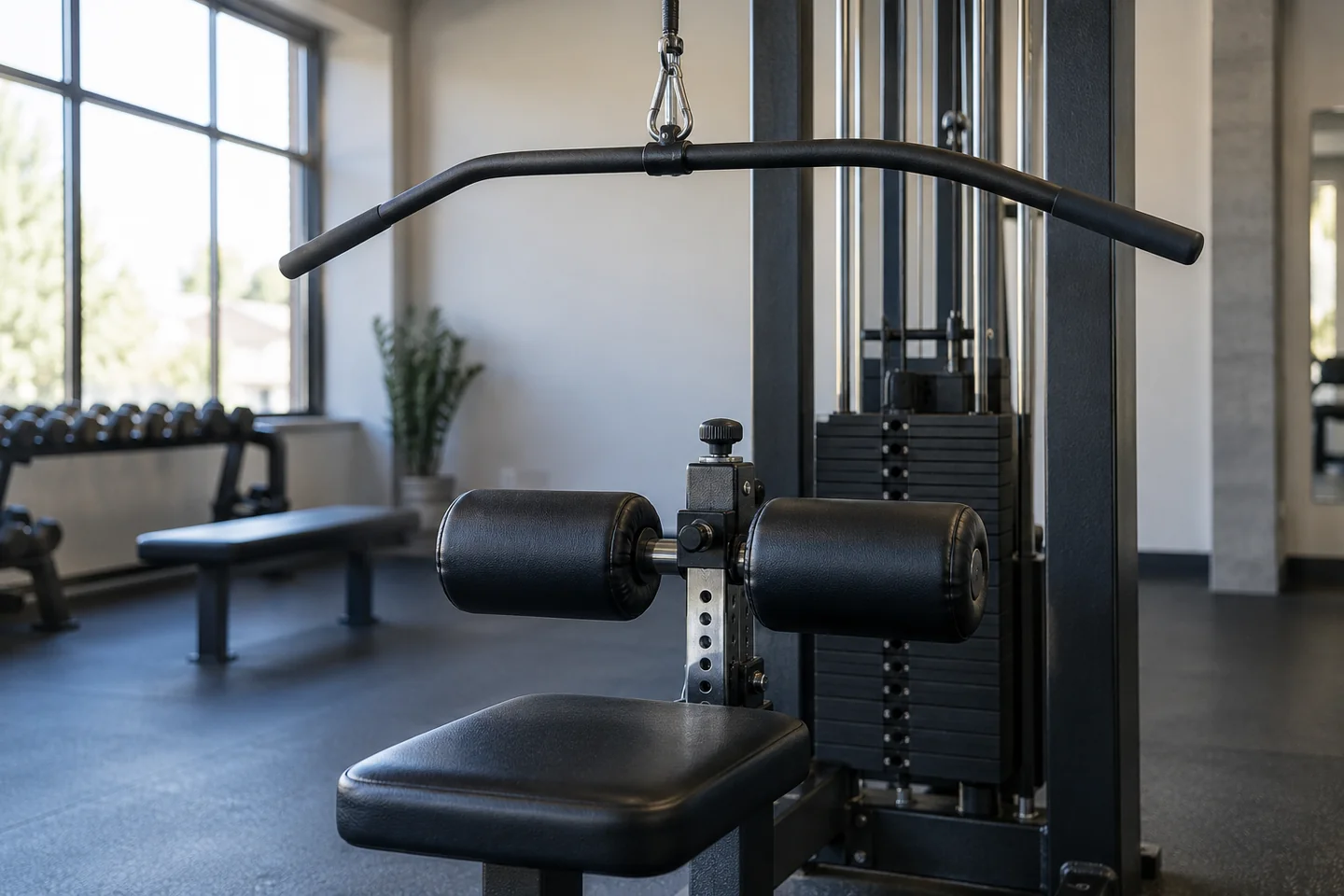
Set the restraint before the pull
Sit with your feet supported and adjust the pad so it rests securely across the thighs without painful pressure. Follow the machine's instructions for the exact placement. A large gap can let you rise from the seat when the cable becomes loaded; an excessively tight pad can make entering and leaving awkward. Test the position with a light resistance. If the pad shifts after adjustment, stop and have its locking mechanism checked before continuing.
Check how you are meant to reach the overhead attachment. If it is too high to collect without jumping or stretching precariously, ask gym staff for help with the station. Do not climb onto the seat or stack to reach it. Some machines have a different entry arrangement, and a demonstration is quicker than guessing.
Keep the first movement controlled
Use the grip and bar path you have been taught, usually drawing the attachment down in front of the body rather than behind the neck. Avoid a large backward swing to start the pull. The pad should support your position without becoming something you wedge against to move a weight that is too heavy.
Return the attachment gradually, keeping control as the arms rise. Do not let the final repetition lift you unexpectedly from the seat. If that happens, reduce the resistance and revisit the setup. A heavier stack is not useful if it changes the exercise into repeated stand-ups and drops.
When finishing, follow the machine's entry-and-exit procedure in reverse and let the resistance settle. Check that clothing or headphone wires are clear of the pad before standing. Note the pad setting if it fits, but confirm it again next time; upholstery thickness and seat height can make an identical-looking station different. The right adjustment is one that lets you sit, move and leave comfortably, rather than one that clamps you in as tightly as possible.