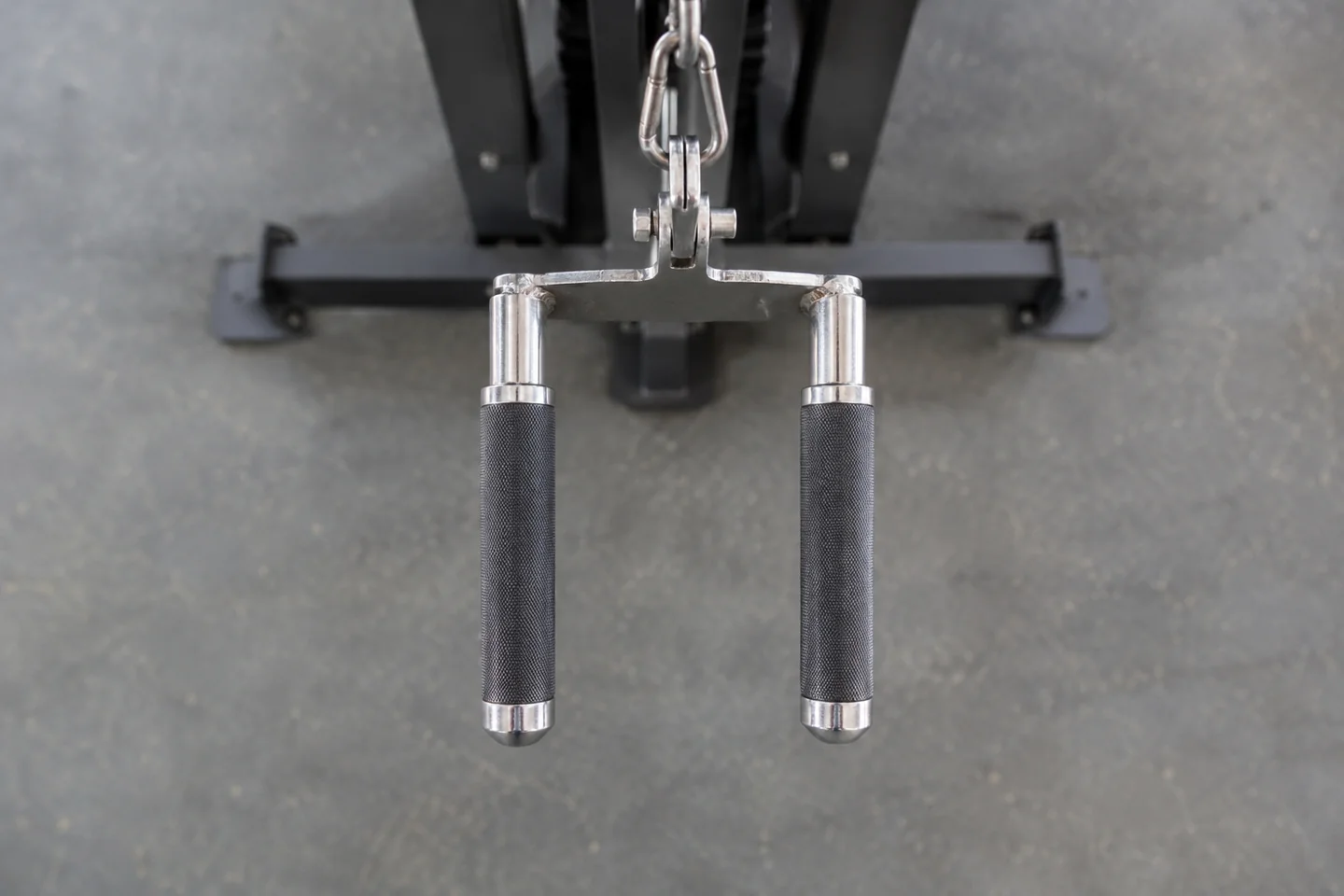
Picture the hands first
Imagine holding a dumbbell at each side with the palms facing your thighs. That is a neutral hand orientation. On a cable attachment with parallel handles, the palms face inward towards each other. It differs from palms facing forwards or downwards, depending on the exercise and position.
The phrase can appear in descriptions of presses, rows and curls. The movement still needs its own instructions. A neutral-grip press is not performed like a neutral-grip row simply because the hands share an orientation. Check the support, cable height or bench position that belongs to the actual exercise.
Check what the equipment allows
Dumbbells let the hands turn independently, while a fixed machine handle may hold them at a set angle. Some attachments are only partly neutral, with handles that slope. Use the intended gripping area and avoid twisting the wrist to force the equipment into a textbook label.
If the position feels uncomfortable, stop and review it. Neutral is a description, not a promise that every wrist or shoulder will prefer it. You may need a different handle, a different range or individual guidance. There is no reason to keep using a painful grip because its name sounds anatomically ideal.
When a programme specifies a grip, ask what the instruction is meant to change. It may be part of a particular exercise variation rather than a universal rule. A quick demonstration can remove ambiguity about whether the palms remain facing one another throughout or rotate during the movement.
For training notes, record the grip alongside the exercise name if you change between versions. That gives context to differences in feel or load. It is much clearer than treating every dumbbell press or cable row as identical. The word itself is simple; its usefulness comes from describing what your hands actually do on the equipment you are using.