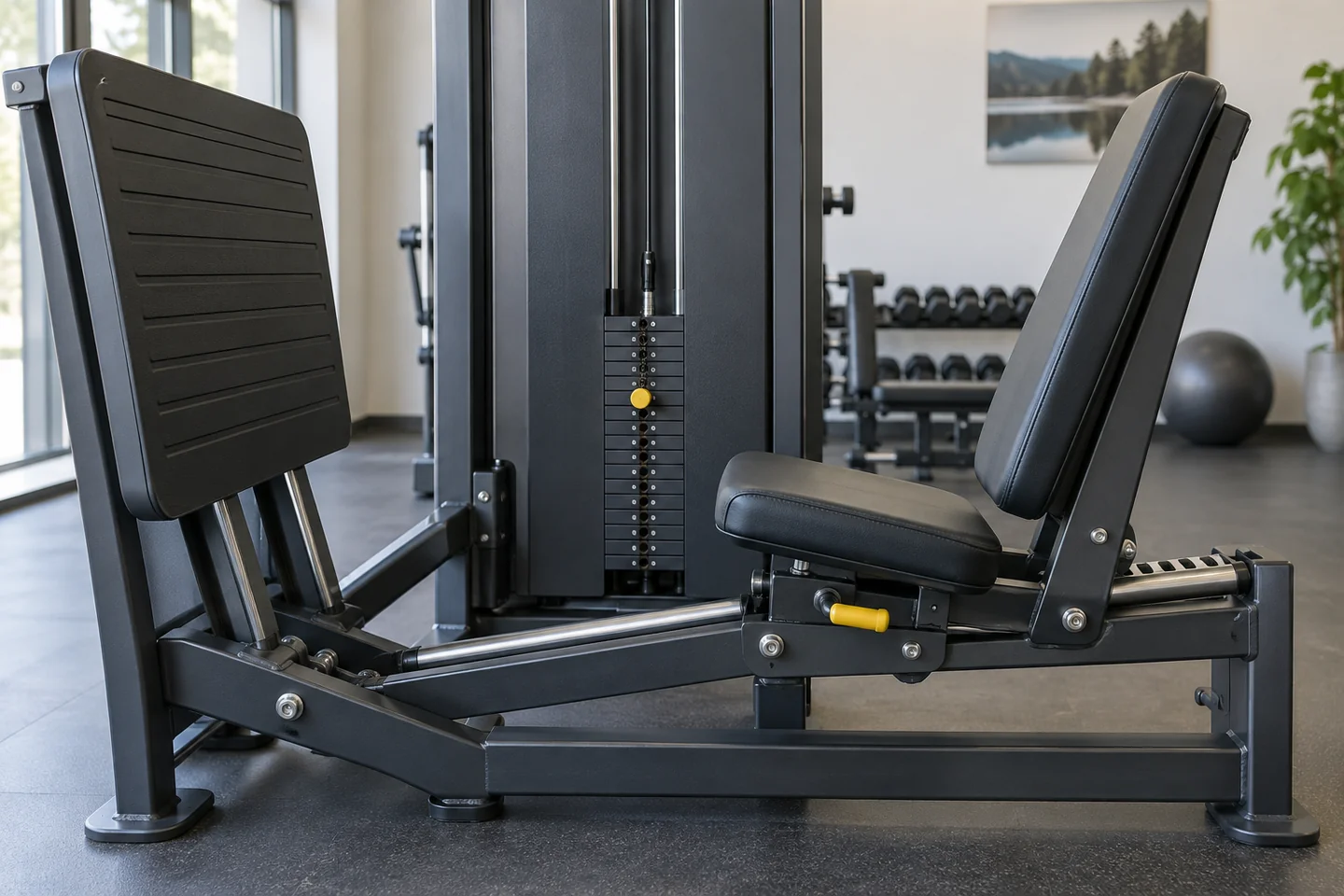
Identify the machine before sitting down
Read the instruction panel and ask a member of gym staff to demonstrate the controls. Find the seat or backrest adjustment, resistance selection and any start, stop or release mechanism. If the machine uses safety catches, you need to understand them before your feet begin moving the load. Do not discover the exit procedure at the end of a tiring set.
For a first session, a selectorised machine may be easier to understand than a large sled, but ease of use still depends on the model and on whether it fits you. The number on the stack is not a universal starting prescription. Select a light trial resistance with guidance, rather than copying the previous person's setting or treating an empty plate-loaded machine as weightless.
Adjustments should be made with the equipment at rest, following its instructions. A lever beneath the seat may move more than you expect. Keep fingers out of moving joints and make sure any pin engages fully. If the seat rocks or the locking position is unclear, ask for help before using it.
Find a supported starting position
Sit with your back and pelvis supported by the pad and place your feet securely on the platform. The exact seat distance depends on the machine and your proportions. You should not feel folded so tightly that your pelvis rolls away from the backrest before the repetition begins. Equally, the setup should not require you to reach with the toes just to contact the plate.
Use a moderate, comfortable foot placement for the initial trial. Extreme high, low, narrow or wide placements are unnecessary while you are learning how the carriage moves. Keep the whole foot in contact and allow the knees to move in a comfortable direction consistent with the feet. A trainer can help distinguish a seat adjustment problem from a movement question.
Press and return smoothly through a range you can control while remaining supported. Avoid snapping the knees straight or letting the load force you into a deeper position at the bottom. The machine may have more available travel than you can use comfortably. That extra travel is not a target you must reach.
Use the light trial to check details
One or two deliberately easy repetitions can reveal whether the handle is reachable, whether your clothing catches the seat and whether the return position feels cramped. Stop to make changes rather than trying to fix the seat while the resistance is moving. A small adjustment can be more useful than another increase in weight.
Watch for the pelvis lifting away from the pad as the knees approach the body. That is a reason to shorten the range and reassess the setup, not to pull harder on the handles to force a deeper repetition. If you experience pain or cannot find a comfortable position, stop and request individual guidance or a different exercise.
Keep your hands on the designated handles rather than pressing on the knees. The handles help you remain positioned on the machine; they are not a way to compensate for a weight you cannot control. Your breathing should remain manageable throughout the trial, without a prolonged breath-holding contest.
Remember the setting, not just the weight
If the setup works, note the seat position and which machine you used. A photograph of the adjustment scale may help if the gym permits it and no one else is in the image. A simple note such as the model or location plus the seat number is often enough. Stack numbers alone leave out much of what made the exercise repeatable.
On another leg press, start the setup process again. Pulley systems, lever lengths, sled angles and starting resistance can all differ. A larger printed number on one machine does not necessarily mean you produced more force than on another. Comparing them as if they were identical can encourage an unnecessary jump in difficulty.
A machine induction is also a chance to ask what to do if a repetition cannot be completed. Have the staff member explain the stopping procedure on that exact model while the resistance is easy to manage. Knowing the control exists is different from knowing how to use it. You should not need to search for an unfamiliar handle under effort. If the explanation remains unclear, stay with a simpler familiar exercise until someone can demonstrate it properly.
Finally, return the resistance to its resting position according to the instructions before moving your feet or standing up. Leave the machine as the gym requests. Being able to enter, perform a controlled trial and exit confidently is the useful outcome of the first encounter; a large stack selection is not required to demonstrate that you understand it.