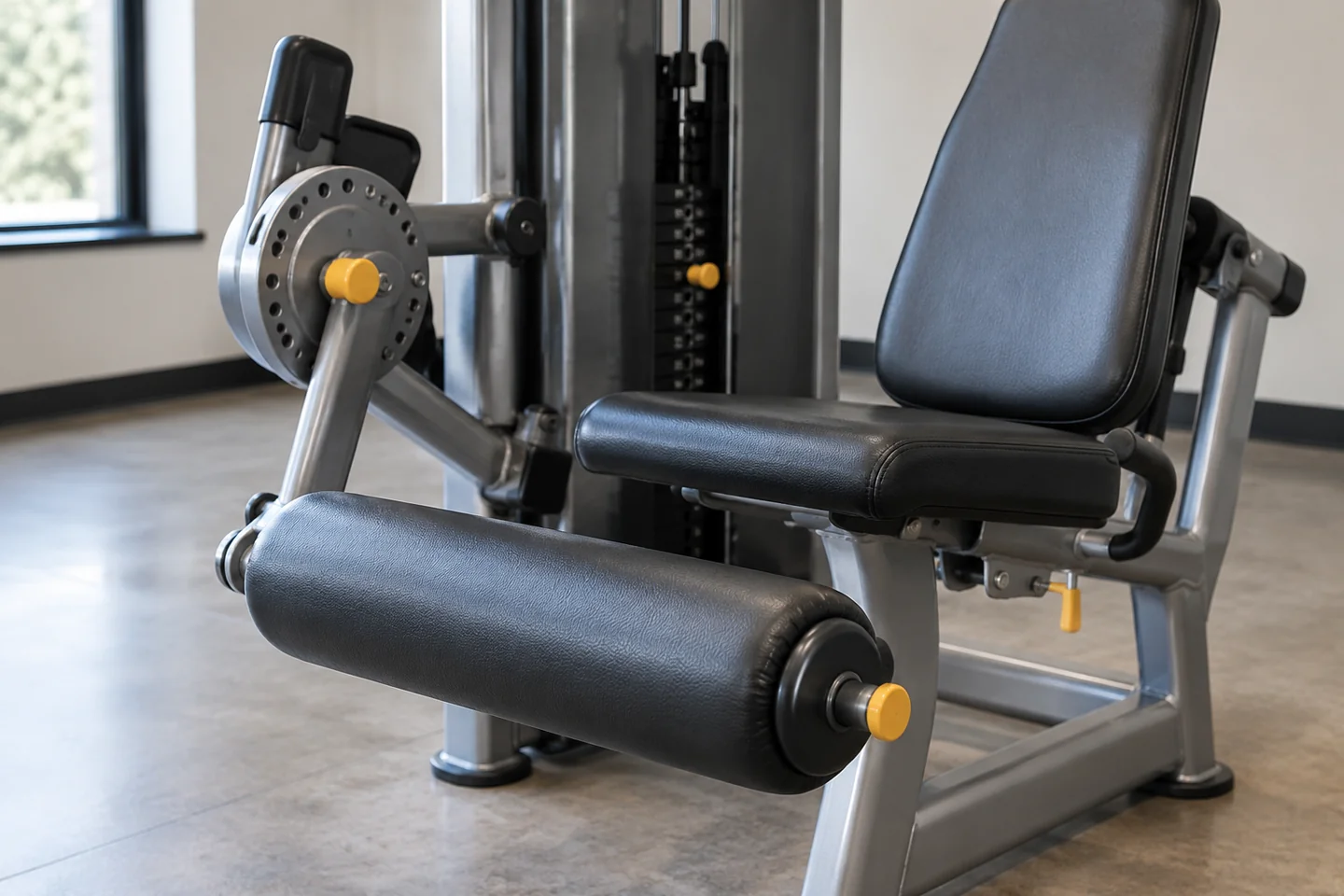
Line up the equipment
Read the adjustment diagram for the model. Sit with your back supported and use the backrest setting to bring your knees into the intended relationship with the machine's pivot. Your knees should not be buried far behind the seat edge or pushed into an awkward position to reach the roller. Ask staff to check the alignment if the markings are unclear.
Place the lower roller where the manufacturer specifies, generally against the lower shin above the ankle rather than directly on the foot. Secure any range or start-position adjustment before selecting a trial resistance. Make these changes with the mechanism resting, keeping fingers clear of moving parts. Check that each pin has engaged before putting pressure through the roller.
Let a light trial answer the next question
Extend the knees smoothly through a comfortable range, then return the weight under control. Avoid kicking into the top position or dropping the stack on the way back. Keep the back and pelvis on the support instead of lifting yourself to move more weight. The handles are there to help you remain settled, not to turn a difficult repetition into a whole-body heave.
If the roller travels into an uncomfortable place on the shin, stop and revisit the setup. The machine's full available arc may not be the right arc for you. A qualified instructor can show how its range settings work, and pain requires individual guidance rather than another attempt with a different foot angle.
Record the seat and pad settings if they make the machine comfortable. It is easy to remember a stack number and forget the adjustment that actually made the movement possible. Before the next visit's first set, confirm those settings again: another user may have changed both. A repeatable setup gives you a better basis for judging the exercise than trying to reproduce the same weight on a seat arranged differently.