Establish the path without momentum
Stand comfortably with room at both sides. Try the movement without weights first, raising the arms outwards in a comfortable path with a slight bend at the elbows. A trainer can help choose the precise plane and range for you. There is no need to force the hands above a comfortable height or twist the wrists into a dramatic pouring motion.
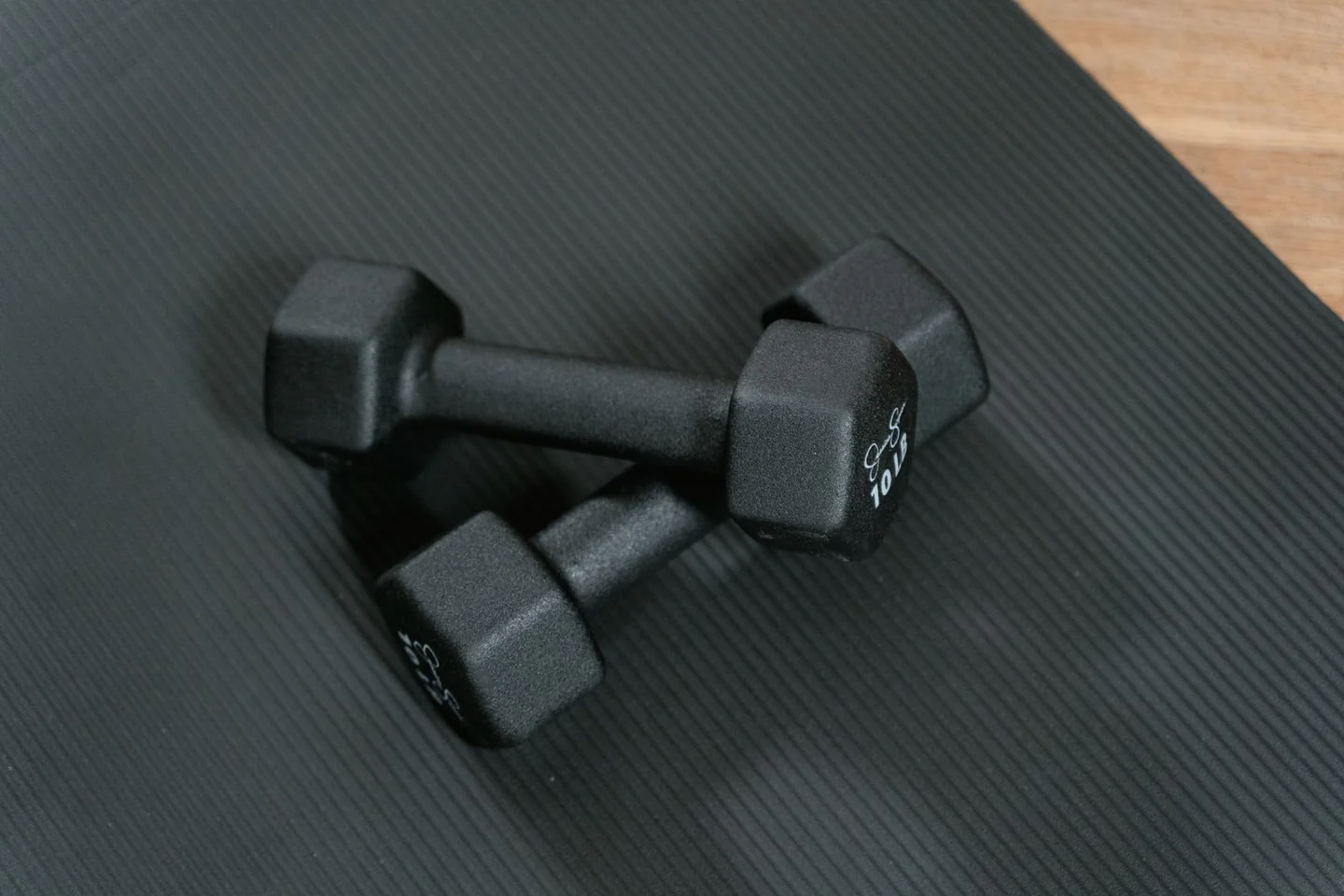
Add a modest pair of dumbbells and repeat slowly. If you need a knee dip and a torso swing to start every repetition, the load is making the exercise difficult to judge. Set it down and choose a lighter pair. The numbers used for a row or press do not determine what belongs in a lateral raise.
Watch the return as closely as the rise. The weights should come down under control instead of falling into the thighs. Keeping a little space at the bottom can make the motion quieter, but it is not a rule to hover indefinitely. Use the version you have been taught and allow a clear pause when you need to reset.
Make room for the dumbbells
The arms travel well beyond the width of your mat or bench. Check for mirrors, racks and other people before beginning. A crowded gap between machines may look large enough while your arms are down and become too narrow during the repetition.
Handle dimensions can matter too. A long adjustable dumbbell may feel cumbersome even at a light setting. If the ends interfere with the movement or make it difficult to control the path, use a more suitable implement rather than trying to work around the obstacle with an awkward wrist position.
Keep the neck relaxed enough that you are not craning towards a mirror. Some shoulder movement is normal; the aim is not to pin everything rigidly down. If the exercise creates pain, stop and ask for individual guidance rather than chasing a particular angle from a video.
Let a modest weight remain modest
Small increases can represent a large change when the starting dumbbell is light. Moving to the next pair on the rack may be more demanding than expected. Recheck the movement instead of assuming the progression must be accepted because it is the next available number.
If the first repetitions are controlled but later ones become swings, finish the set at the point where the intended motion is still recognisable. There is no need to manufacture extra repetitions by changing the whole exercise. A cleanly ended set leaves you with useful information about the pair you chose and the range you could manage.