Understand what the floor changes
A dumbbell floor press is performed lying on the floor rather than on a bench. The upper arms meet the floor during the lowering phase, so the available movement differs from a bench press. It is still an exercise requiring control; the floor does not make every weight manageable or make the movement suitable for every shoulder.
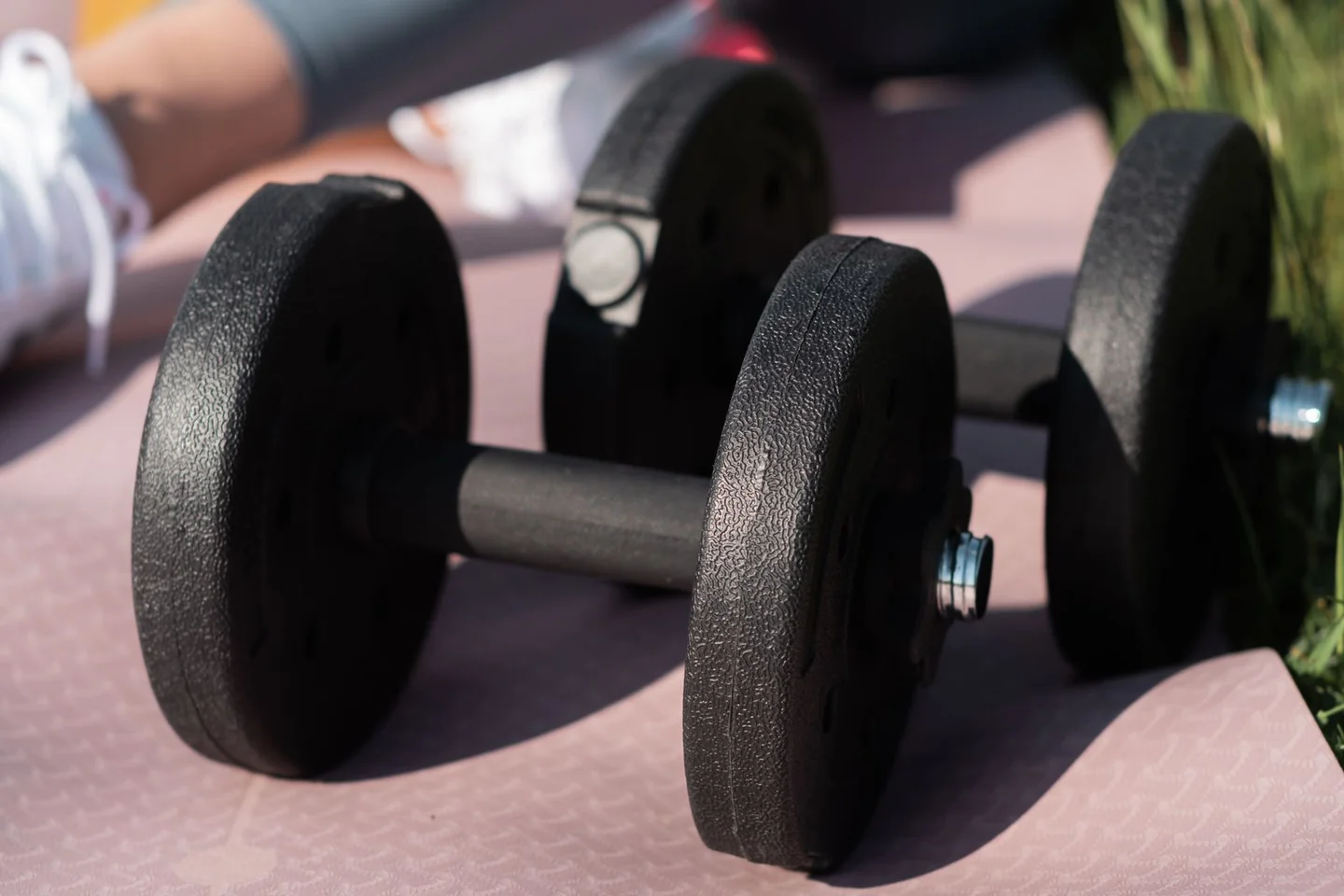
Use a firm, comfortable surface with enough room for the arms and dumbbells. A thin exercise mat can reduce contact discomfort without creating a deeply unstable surface. Clear the area on both sides. The space occupied by your torso is only part of the exercise's footprint, particularly while setting the weights down afterwards.
Begin with weights that are easy to manage. Getting a pair into position on the floor is its own skill, and a written guide cannot check whether you are handling them securely. Ask an instructor to show a controlled entry and exit before using challenging loads. Do not lie down and then try to drag heavy dumbbells awkwardly across the floor towards your shoulders.
Let the arms meet the floor gently
Once positioned as instructed, press the dumbbells upwards under control and lower until the upper arms make gentle contact with the surface. Avoid dropping the elbows onto the ground or using the contact as a bounce. Keep the wrists reasonably aligned with the forearms rather than allowing the weights to fold them backwards.
The exact elbow path and hand orientation should feel comfortable and follow the version you have been taught. There is no need to spread the arms into an extreme position to imitate the width of a barbell press. Dumbbells allow some freedom of hand placement, but that freedom also asks you to guide each weight.
Do not clack the dumbbells together above the body. Bringing them close is different from colliding them. If one starts drifting, end the set with the controlled exit you practised rather than chasing it into an awkward reach. Choose a lighter pair for the next attempt.
Avoid treating reduced travel as automatic protection
The shorter range can be useful for a particular training purpose, but it is not a diagnosis or a universal solution for shoulder pain. A painful bench press does not automatically become appropriate on the floor. If you are adapting exercise because of an injury or persistent symptoms, get individual advice rather than relying on the surface to solve the problem.
Similarly, the weight you use on a bench does not set the correct floor-press load. The entry, range and contact all differ. Start with a familiar, manageable pair while learning those differences. The first goal is to make the movement repeatable, not to transfer a number unchanged from another exercise.
A very thick cushion or mattress introduces a different issue: the body and elbows sink, making the contact less clear. Use equipment intended for exercise on a stable floor, not a soft bed as an improvised bench. Check that the mat itself does not slide when you move into position.
Plan the final repetition in advance
The set should end before the weights become difficult to control above you. Know how you will lower and place them safely, keeping fingers clear. If you cannot demonstrate that process comfortably with light dumbbells, practise the setup with an instructor before making the exercise harder.
In a shared gym, choose an area where people can see that floor space is in use. Avoid lying immediately behind a bench or beside a rack where someone may step back carrying weights. A small relocation can make the session much easier to manage than repeatedly watching for passing feet.
The mat can also affect your exit. A small mat that slides when you turn to sit up may be adequate for lying still but poorly suited to the full sequence. Test the transition empty-handed first, keeping the dumbbells outside that rehearsal. If you cannot get to and from the floor comfortably, discuss a seated machine or another appropriate press with an instructor. The floor version is one option, not an obligation created by the absence of a bench. Choosing an alternative can remove an awkward transition while preserving a clear training task.
Record the exercise as a floor press rather than simply a dumbbell press if you keep training notes. That distinction explains why the movement and load might differ from your bench work. It also helps you repeat the right setup next time instead of reconstructing it from a weight number alone. The floor is a clear boundary, but everything around that boundary still needs deliberate arrangement.