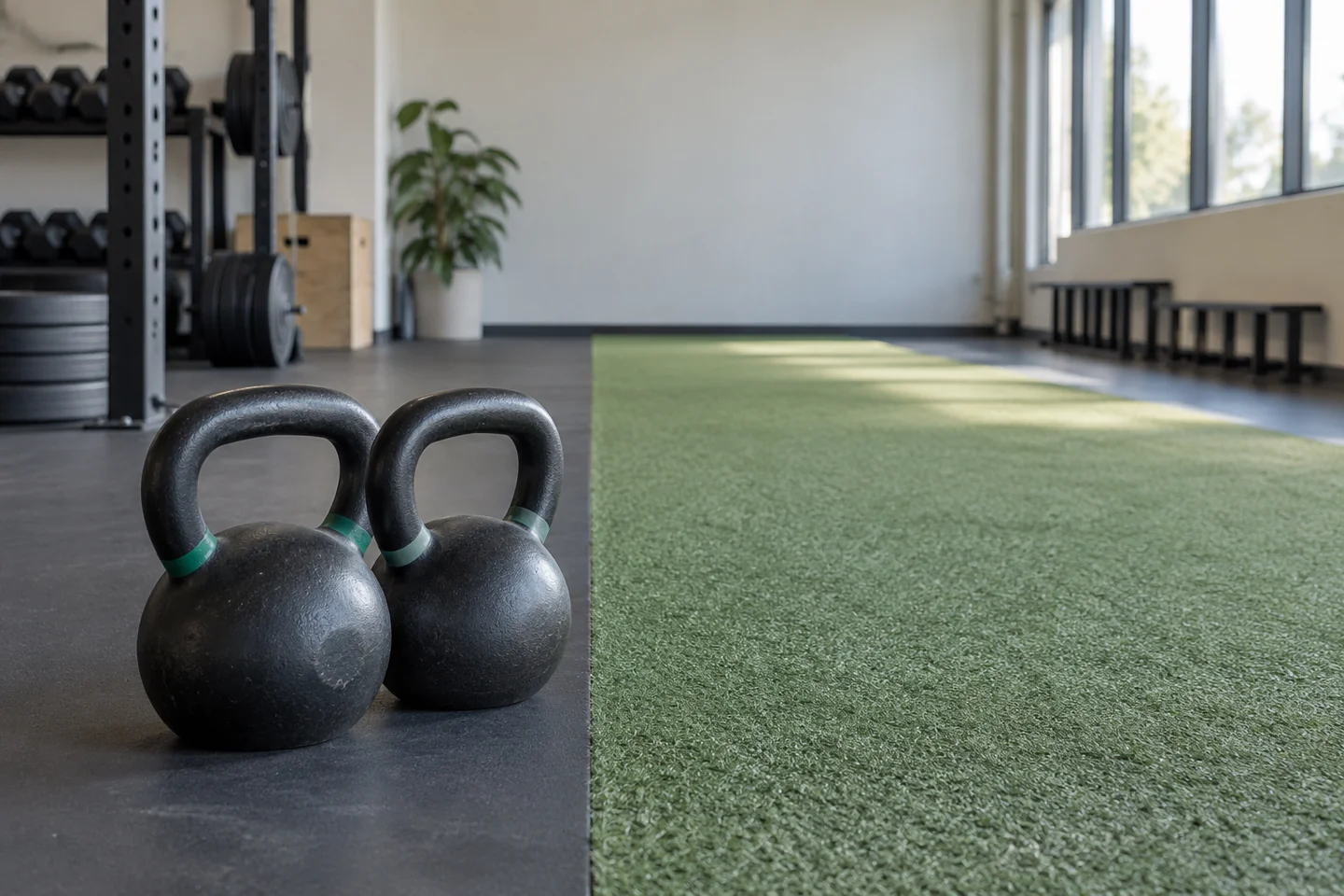
Walk the route empty-handed
Look for a level, clear lane with enough width for your hands and the weights. A gap that fits your shoulders may not fit two dumbbells held at your sides. Remove your own loose items and choose another route if people are regularly crossing it. Do not assume other gym users will notice that you are carrying a load behind them.
Check the destination. You need room to stop, turn with several controlled steps if appropriate and return, or a designated place to set the weights down. A tight pivot beside a wall can bring the implement into your leg or the surface. A wider turning area makes the task less awkward.
Start with a load you can pick up, carry and place down deliberately. The lift from the floor is part of the exercise setup and may need separate instruction. Ask a trainer to demonstrate the chosen carry, including whether it uses one implement or two and how the return should be organised.
Keep the turn ordinary
As you approach the end of the lane, slow down. Use small steps to change direction rather than twisting sharply on one planted foot while the weights swing. Keep the implements clear of your legs. If the space does not allow an unhurried turn, choose a different lane or end the carry there as planned.
A carry is not a race through obstacles. If someone enters the route, stop safely or put the load down in a clear place rather than weaving around them. Do not step over stray equipment while holding weights. The walking surface deserves the same attention as the load.
Grip can become the limiting factor before the rest of the body feels especially tired. Finish before the fingers are opening or the weights are swinging unpredictably. There is no useful requirement to reach a distant marker if doing so means you can no longer control the objects.
Plan the landing
Set the weights down under control in the place you checked earlier. Keep fingers and toes clear. Avoid finishing beside a crowded rack where you immediately need to negotiate another awkward lift to return them.
Do not place your turnaround marker in someone else's route. A cone or bottle can become a trip hazard in a shared area, and a wall feature may provide an adequate reference without another object on the floor. If the gym has a designated carry lane, learn its traffic arrangement. Agreeing on the route before lifting is simpler than negotiating right of way while both hands are occupied.
If you record the carry, include the route or distance and whether turns were involved. A short lane with several turns differs from a long straight walk. Those details help explain the session without reducing it to the weight alone. The route is part of the exercise you selected, and a clear one lets you concentrate on carrying rather than solving a new obstacle at every step.