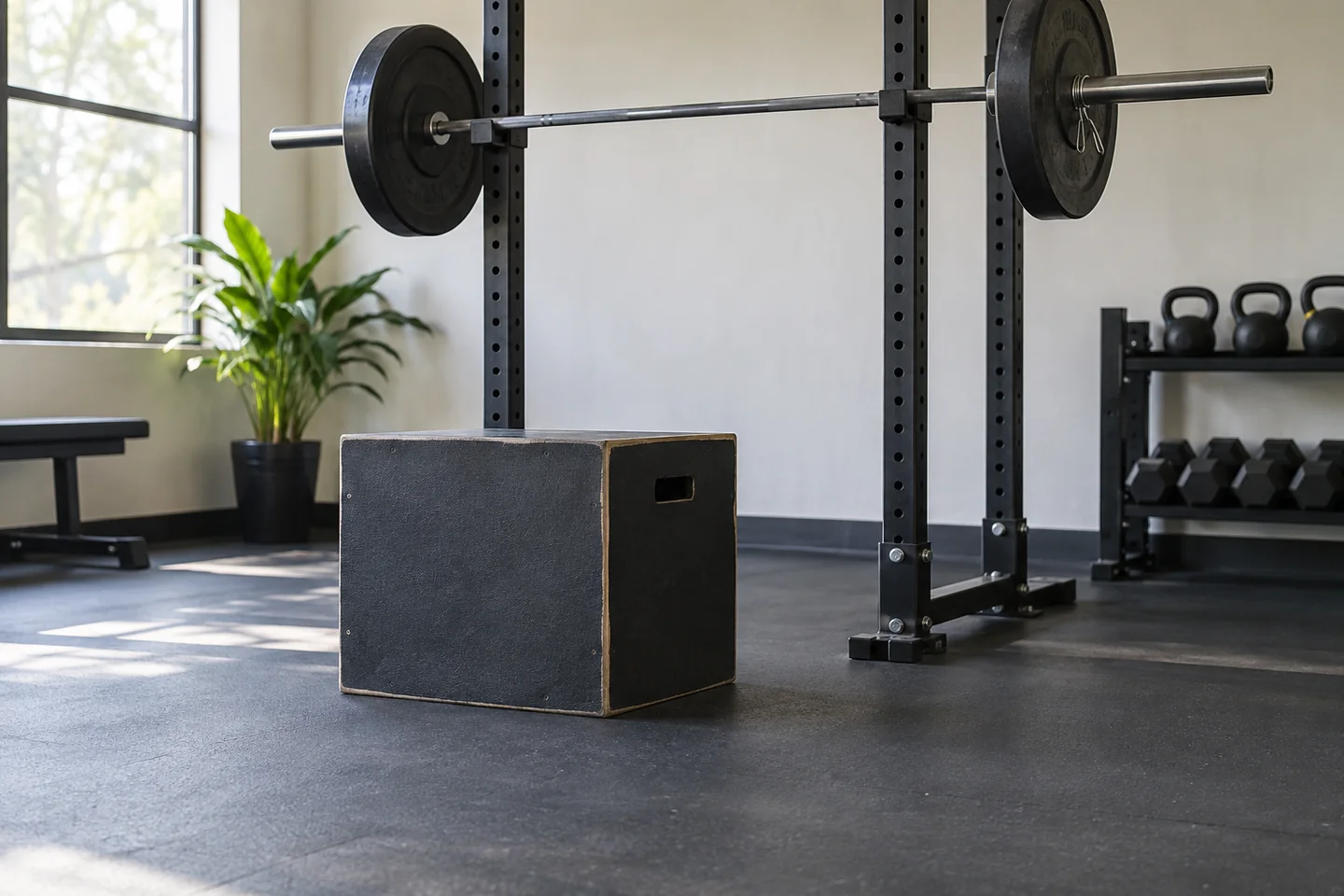
Choose the height before the load
Use a stable exercise box or bench intended to support body weight. Check that it sits level and will not slide when touched. A soft sofa, wheeled chair or stack of loose objects is not an equivalent reference. Begin with no external weight so you can work out the distance and height without also managing a load.
Stand close enough that a controlled squat can bring you to the box without a backward lurch. Descend gradually, touch the surface lightly if that is the version you are practising, then return to standing. Keep your feet in contact with the floor. If finding the box requires dropping the final few inches, it is too low for that attempt or positioned poorly.
The aim may be a light touch, a deliberate seated pause or a sit-to-stand exercise. Those are not identical tasks. Find out which one your programme actually intends. Advice about one version can become confusing when applied to another, particularly around whether you should briefly unload onto the seat.
Notice the approach
Looking behind you in the middle of a repetition makes the setup harder to judge. Check the box before the set, establish your position and then look ahead in a comfortable direction. If you are not sure you will reach the surface, stop and reset instead of feeling around backwards while holding a weight.
A first practice set can expose a simple distance problem. Too far away and you reach for the box with your hips; too close and the calves may meet it early. Move your feet a small amount and retry without load. The adjustment should make the movement simpler, not create a new balancing trick.
There is also no need to chase the lowest box in the room. A higher reference can be appropriate while you are learning a controlled descent. You can discuss a lower height later if it serves the exercise and remains comfortable. Height is one feature of the setup, not a ranking of how seriously you train.
Use the reference consistently
Once you have a workable arrangement, remember both the surface height and your foot position. Returning to the same box at a different distance may produce a different movement. If another person moves the equipment between sets, take a moment to establish the setup again.
When a weight is added, keep the landing controlled. Do not let the presence of a seat become permission to collapse onto it. Equally, do not bounce off it to create momentum. If the box shifts, creaks unexpectedly or no longer feels stable, end the set and choose sound equipment.
The box has done its job when it gives you a clear reference you can repeat. It does not need to remain in every squat you ever perform. Some people find the marker useful for a long time; others use it briefly to understand depth before practising without it. Make that choice around control and the purpose of the exercise, rather than a rule that the box must disappear as quickly as possible.