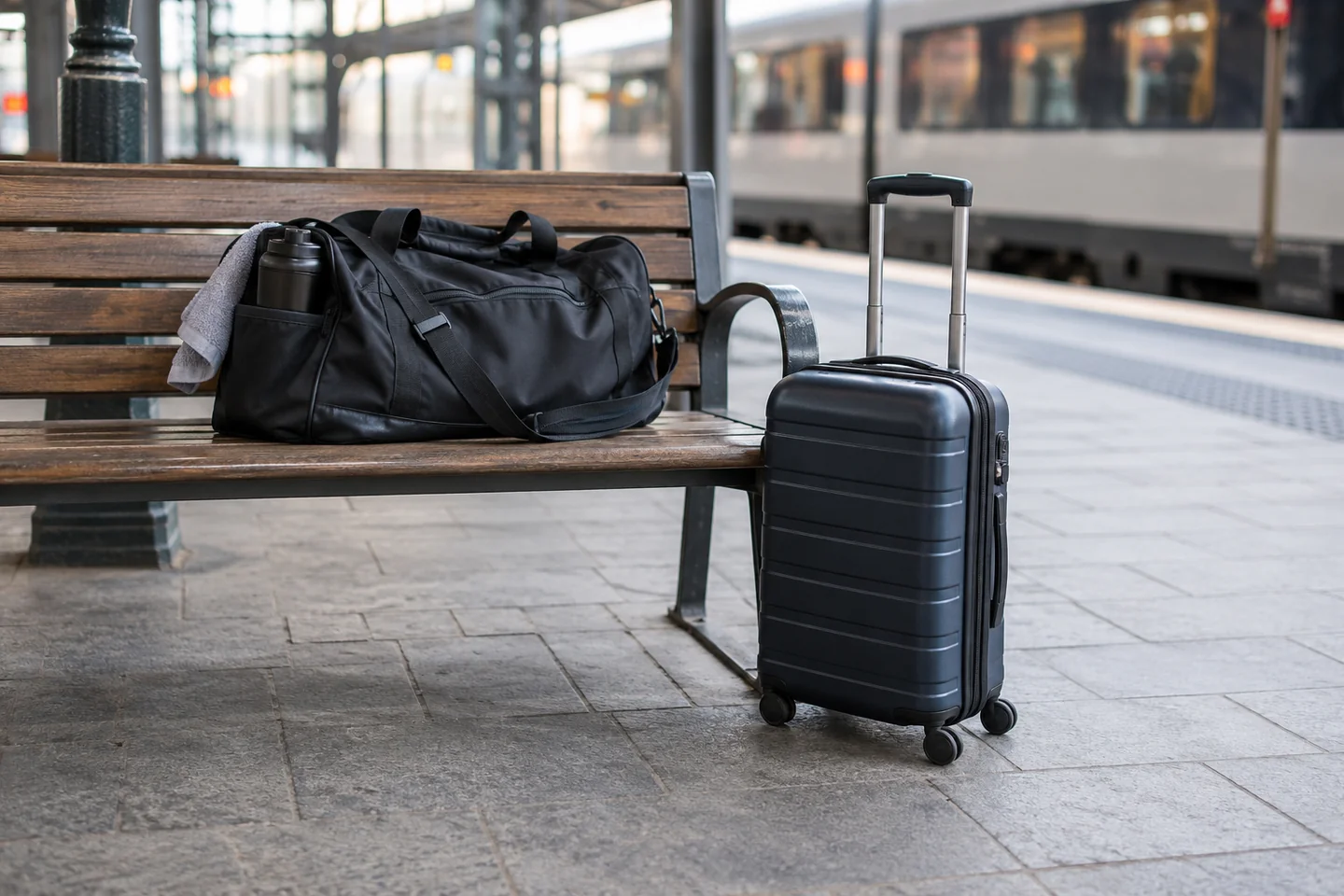
Count the door-to-door day
Include packing, getting to the station or airport, waiting, the journey itself and reaching the accommodation. An afternoon arrival can still leave you dealing with luggage and unfamiliar transport well into the evening.
If the destination has a gym, check its hours and access rules before building a session around it. A photograph on a booking page does not establish which equipment is currently available or whether an appointment is required.
Keep the first day's plan flexible enough to survive a delay. A missed connection should not force a decision between rushing to an unfamiliar gym and feeling that the whole week is ruined.
A connection or check-in time is usually fixed; a recreational workout often has more flexibility. Put the fixed parts in first. This prevents the day from depending on an optimistic sequence in which baggage arrives immediately, transport is waiting and the hotel room is ready early.
If you have reserved a class or coaching session at the destination, know the cancellation arrangement before travelling. A delayed journey may make it impossible to attend. Contact the provider when you know there is a problem rather than trying to force the original plan through circumstances it no longer fits.
Keep offline directions or booking details available when useful. Administrative preparation can make arrival easier without adding another fitness task to the day.
Choose what belongs on arrival
You may prefer to settle in, find the next day's route and leave training for another suitable time. That is a scheduling choice. There is no requirement to use the hotel gym merely because it is included in the stay.
If you do train, use a suitable arrangement for the equipment and circumstances. Do not transfer numbers from familiar machines directly to unfamiliar ones. Ask staff about equipment you do not understand and keep any changes visible in your record.
Avoid using a late arrival as the start of a long session that then leaves very little room for sleep. Looking at the next morning's obligations can make the trade-off clearer than judging only whether the gym is open now.
Keep the luggage simple
Pack the items you genuinely expect to use. Training shoes and a change of clothes may be sufficient; a collection of accessories can consume space without making the plan more realistic. Check transport and accommodation rules for anything unusual.
Separate used kit so that it can be dealt with appropriately during the stay. A schedule that assumes a fresh towel and dry clothes every day may need revision if laundry facilities are limited.
If exercise is not the purpose of the trip, allow its place to reflect that. A family visit, work event or holiday can have demands that do not appear in your normal training calendar.
The journey home deserves the same attention. Unpacking and preparing for work may make the next morning's appointment less straightforward than it looked a week earlier.
Write a realistic next session into the calendar once the travel details are known. You can maintain a connection with your routine without making every departure and arrival a test of how much activity fits around a suitcase.