Give the numbers a home
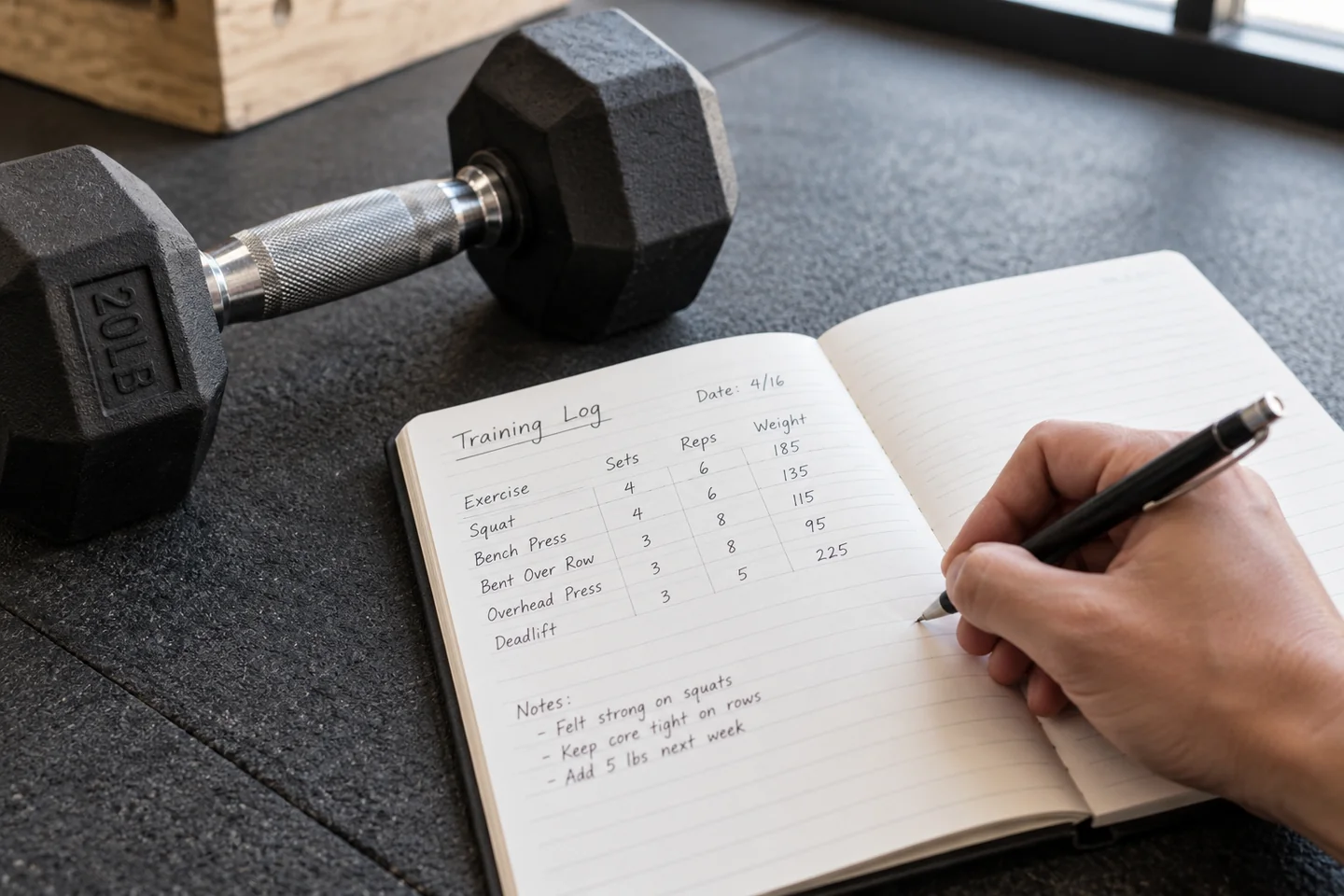
Start each entry with the date and the session name. Under each exercise, separate the intended work from what you completed. If the plan says a range of repetitions, copying that range into the completed column tells you nothing about the session itself.
Record the equipment, the load with its unit, and the repetitions completed in each working set. For two dumbbells, make clear whether the load means each dumbbell or their combined weight. Label warm-up work separately if you record it, so it is not later mistaken for the main sets.
A compact entry might say machine row, seat 4, setting 3, then list the completed repetitions. This is a format example rather than an exercise recommendation. The seat number is a reminder of a previously checked setup, not a universal instruction for everyone using that machine.
Add the detail that changes the interpretation
Useful notes answer a future question. Different machine today explains why the load cannot be compared directly. Long wait before final set explains a changed rhythm. Unsure about seat position identifies something to ask about next time.
You do not need a description of every sensation. A short effort note can help if you use it consistently, but avoid pretending it is a laboratory measurement. Words such as comfortable, challenging or stopped early may be clearer than an elaborate score you do not understand yet.
Record a set when it finishes. Several sets with similar numbers become surprisingly easy to mix up once you have moved to another exercise. If writing immediately would obstruct other users, step to a suitable place and make the entry there.
Keep facts and plans separate
Leave a small space for the next visit: check handle, ask coach about progression, or repeat the same setup. Mark these as intentions. An instruction for next week should not look like work already completed.
When a set is interrupted, say so. If you forget a load, leave it unknown. An honest missing detail is more useful than a neat invented number. The log exists to support decisions, and false precision gives those decisions a poor foundation.
Review the system after several visits. If a column is always empty, decide whether it is actually needed. If you repeatedly wish you had recorded a particular adjustment, add a place for it. Your first layout does not have to become permanent.
Use a simple symbol for an incomplete or interrupted set and define it once. A dash could mean not performed, while a question mark could mean a detail was forgotten. Avoid using zero for every situation: zero repetitions, a missing entry and an exercise omitted because time ran out describe different events.
If someone else writes the programme, keep their instructions intact and put your results beside them. Editing the target to match the result removes the distinction you may want to discuss later. You can update a future target once a change has been agreed, while retaining the original session's history.
Make it easy to find again
Use consistent exercise names and keep the pages in date order. In an app, check how to view the previous performance before arriving at the equipment. In a notebook, a simple tab for the current programme may be enough.
The best record is usually unremarkable: clear names, reliable numbers and a few relevant notes. It should help you return to the next session with less guessing, without becoming the most time-consuming exercise in the programme.