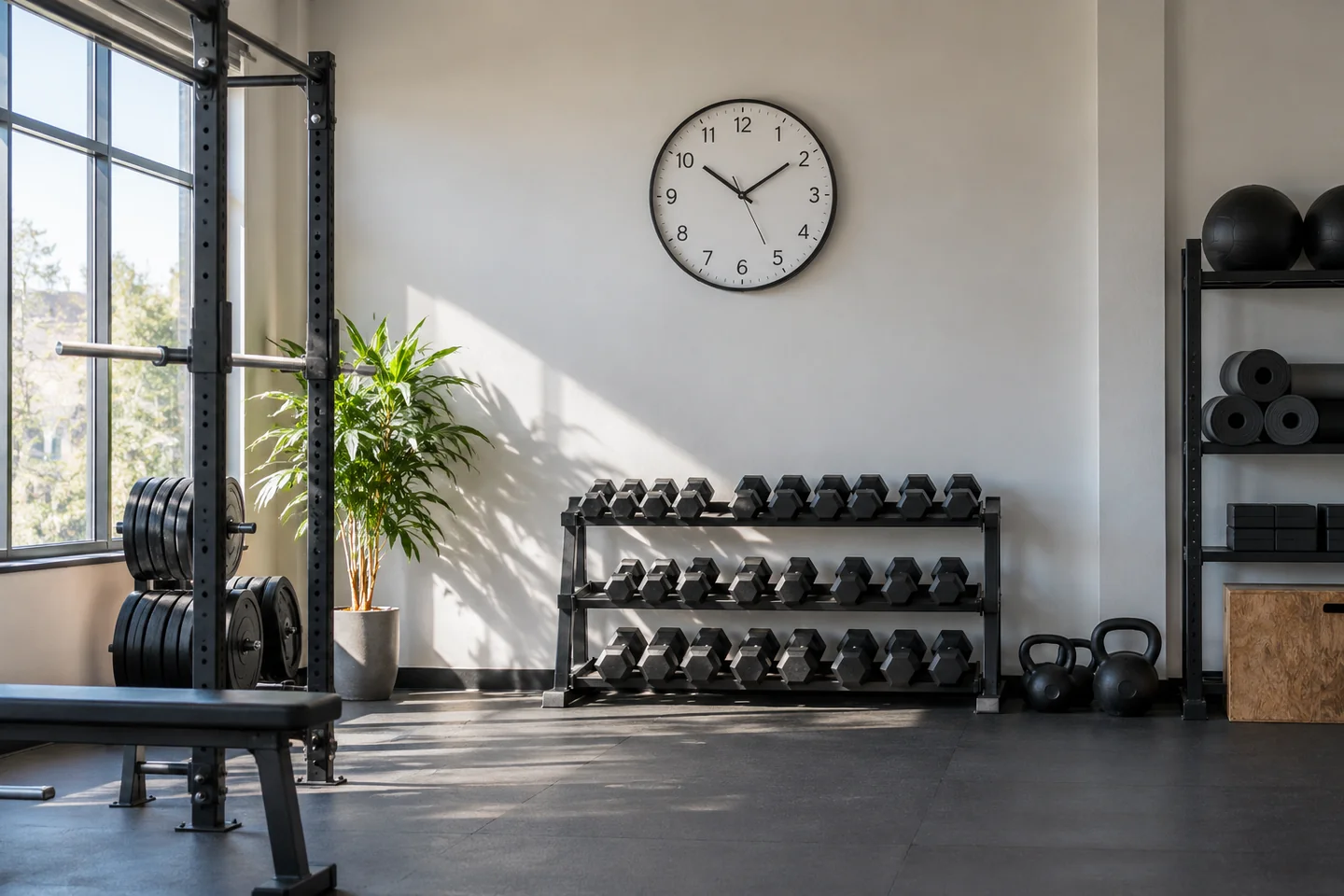
Time the whole appointment
Start with the period you actually need to protect. A forty-minute session inside the gym may require a much longer break once travel, changing and the return journey are included. Put those pieces on the calendar before choosing an appointment that ends at the moment your next meeting begins.
During a normal visit, note the start and finish times. You do not need to time every repetition. A few rough checkpoints, such as finishing preparation or moving to the last exercise, can reveal whether the plan itself fits.
Use a representative day. A quiet Sunday morning may tell you little about a busy weekday evening. If those are both regular training times, keep separate estimates rather than forcing them into one optimistic average.
Include the invisible minutes
Finding a handle, adjusting a seat, putting plates away and wiping equipment all take time. So do appropriate rests between sets. Removing these from the estimate does not make them disappear from the session.
If you keep running late, identify the recurring delay. A wait for one station calls for a different solution from a programme that simply contains too much work for the available slot. Ask for a shorter version or an approved substitution where needed.
Do not solve a timing problem by hurriedly moving unfamiliar equipment or trimming every rest without considering the programme. That changes how you perform the work, not just how efficiently you use the clock.
A first visit may also include an induction, account setup or finding the changing rooms. Keep that estimate separate from an established routine. Conversely, do not promise a shorter appointment to someone waiting for you merely because the exercise list appears brief. Base the arrangement on the time you have actually observed.
An estimate should survive a small interruption. Give yourself room for a short queue or a missing locker key rather than planning around the fastest visit you have ever managed.
After several sessions, revise the calendar using the times you recorded. If an hour is consistently needed, call it an hour. An accurate appointment is easier to keep than a shorter one that requires everything to go unusually well.