Look at the actual increment
A change from one dumbbell to the next can be proportionally much larger at the light end of the rack than at the heavy end. The printed difference may look small while the change in the task feels substantial. This is a feature of the equipment available, not a personal shortcoming.
Check whether the gym has intermediate weights or a different suitable option. Ask staff rather than assuming the visible rack is the entire stock. Some equipment allows small adjustments, while other equipment does not.
Do not attach improvised objects to dumbbells or machines to create a smaller step. Any loading accessory must be intended for the equipment and used according to its instructions. A makeshift solution can introduce a problem that has little to do with the original training decision.
Keep the unit clear. A change between kilograms and pounds can produce confusing comparisons if an app or another gym uses a different system. Write what you actually used rather than relying on the number alone.
Find the programme's progression rule
Ask what evidence should support an increase. The rule may consider repeated performance within a prescribed range and the way the movement is completed. It should not depend solely on whether the previous session felt exciting or whether someone nearby lifted more.
If the rule is missing, get it explained. A list of exercises and loads does not tell you how to respond when the current arrangement becomes manageable. Equally, a slogan about progressive overload does not specify the next appropriate step for an individual.
Record actual repetitions for each set and relevant observations. Copying the target range into every entry removes information needed for a decision. Note changes in equipment or setup so that you are not using an incomparable session as the basis for an increase.
Do not turn one unusually good set into a requirement that every future set use the next weight. Look at the programme's full criteria and the surrounding sessions.
Avoid changing several variables to force the step
If you move to a heavier load but shorten the movement, rush the repetitions and alter the setup, you have changed more than the weight. The resulting number is difficult to compare with the previous work.
Likewise, repeatedly testing the heavier option after several difficult attempts may add unplanned work. A progression decision should fit the session rather than becoming a separate contest within it.
There may be suitable ways to continue working with the current equipment while an increase is not appropriate. Those decisions depend on the programme and the person. Discuss options rather than adopting an arbitrary high repetition target or adding sets without considering the whole routine.
If the exercise is painful or causes concerning symptoms, stop and seek appropriate advice. That is not simply a question of finding a smaller increment.
Consider the equipment as part of the choice
A different type of equipment may offer finer adjustments, but it also changes the exercise record. A cable setting cannot be treated as the same load as a dumbbell merely because the number matches. Start a separate entry and obtain suitable instruction for the alternative.
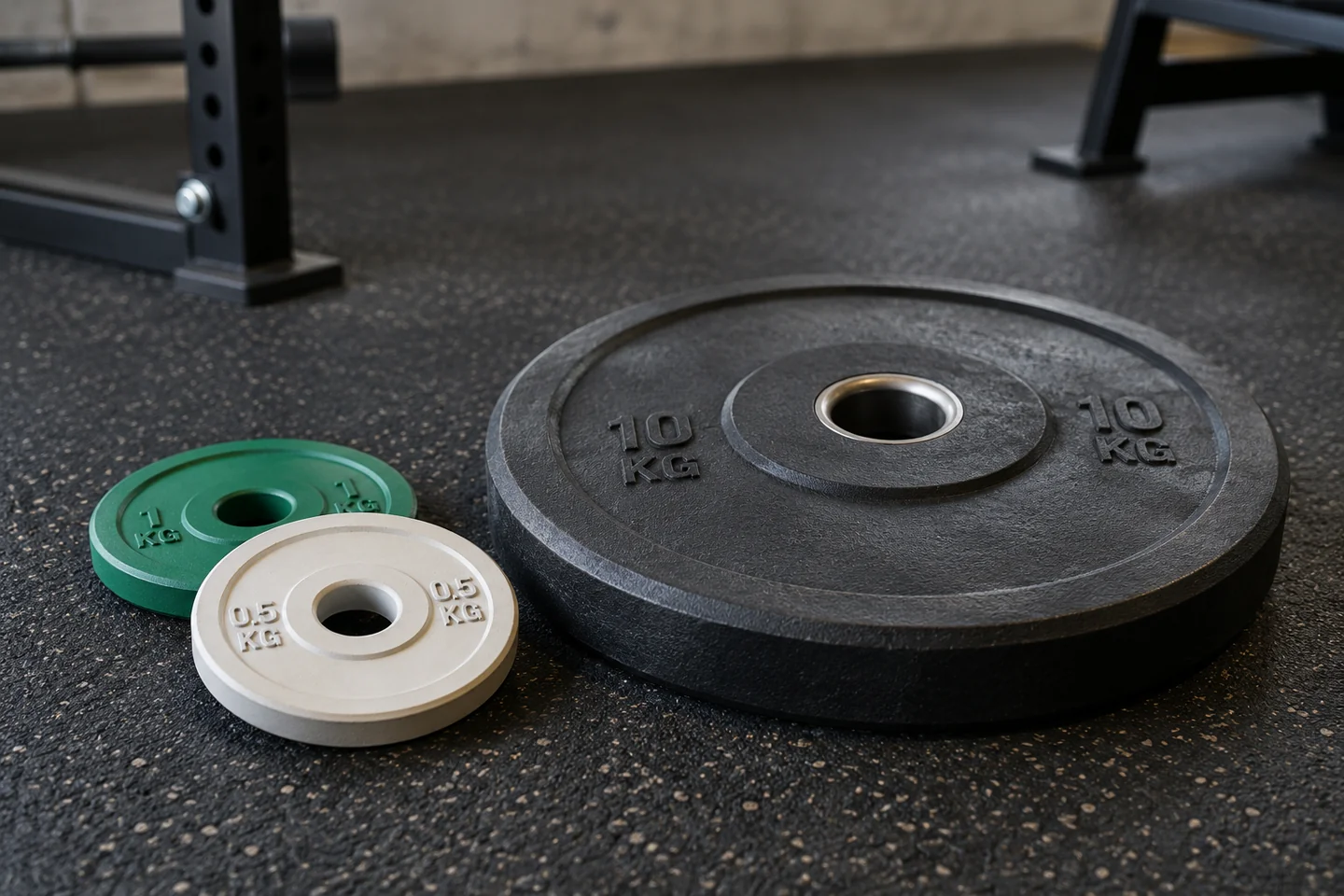
Fractional plates can be useful on compatible equipment, but ownership is not necessary for every beginner. Check the gym's rules and the manufacturer's requirements before buying something. The purchase should solve an actual limitation in an appropriate programme.
If you train at several venues, expect the available steps to differ. Plan for that rather than trying to make every rack support the same numerical progression.
Check compatibility before ordering fractional equipment online. Hole diameter, attachment method and the manufacturer's intended use matter. A product marketed as universal may still be unsuitable for the particular bar or dumbbell at your gym. Ask the venue whether personal loading accessories are allowed and whether staff can confirm the setup. If the answer is unclear, leave the purchase until the training decision has a workable, approved solution.
Keep progress broader than the rack
More repeatable setup, a clearer record and appropriate control can all improve the quality of your training process. They do not replace the programme's goals, but they prevent the load number from becoming the only detail you notice.
When an increase becomes suitable, record it as a change and assess it within the plan. If it is not yet suitable, repeating the current arrangement is still a decision. The next weight will remain on the rack; you do not need to force the calendar to decide when it belongs in your hands.