Let familiar work become informative
The first attempt at a workout includes decisions that have little to do with effort: finding equipment, learning adjustments, and remembering what comes next. Repeating the session reduces that background work. You can spend more attention on the exercise itself and on following the instructions you have been given.
A repeated session is not necessarily an identical performance. You might complete the same work with a more settled setup, use the intended range more consistently, or need fewer reminders. Those observations are worth recording even when the weight column stays unchanged.
Keep the comparison honest. If you shorten rests or change the equipment, write it down. Otherwise a session that feels unexpectedly difficult can look like a loss of progress when the conditions simply changed.
Separate repetition from neglect
Repeating a plan does not mean ignoring problems. An exercise that you cannot set up, equipment that is always unavailable, or instructions you do not understand deserve attention. Ask for an explanation or a suitable alternative instead of repeating confusion because the exercise appears on a sheet.
You can also review whether the routine still fits your time and goals. That review works better with several real entries than with a judgement made halfway through one crowded evening.
If boredom is the main difficulty, first identify what is boring. Waiting for a station is different from disliking the movement. A different appointment time may solve the former without changing the programme at all.
A familiar session also makes equipment shortages easier to anticipate. If you know the second exercise uses a popular station, you can ask about a suitable backup before the next visit. That preparation comes from repeating the routine long enough to discover its ordinary friction, something a succession of entirely new workouts may conceal.
Keep some landmarks
When changes are appropriate, retaining a few familiar exercises can preserve useful reference points. Replacing every exercise at once removes most of the direct comparisons in your log.
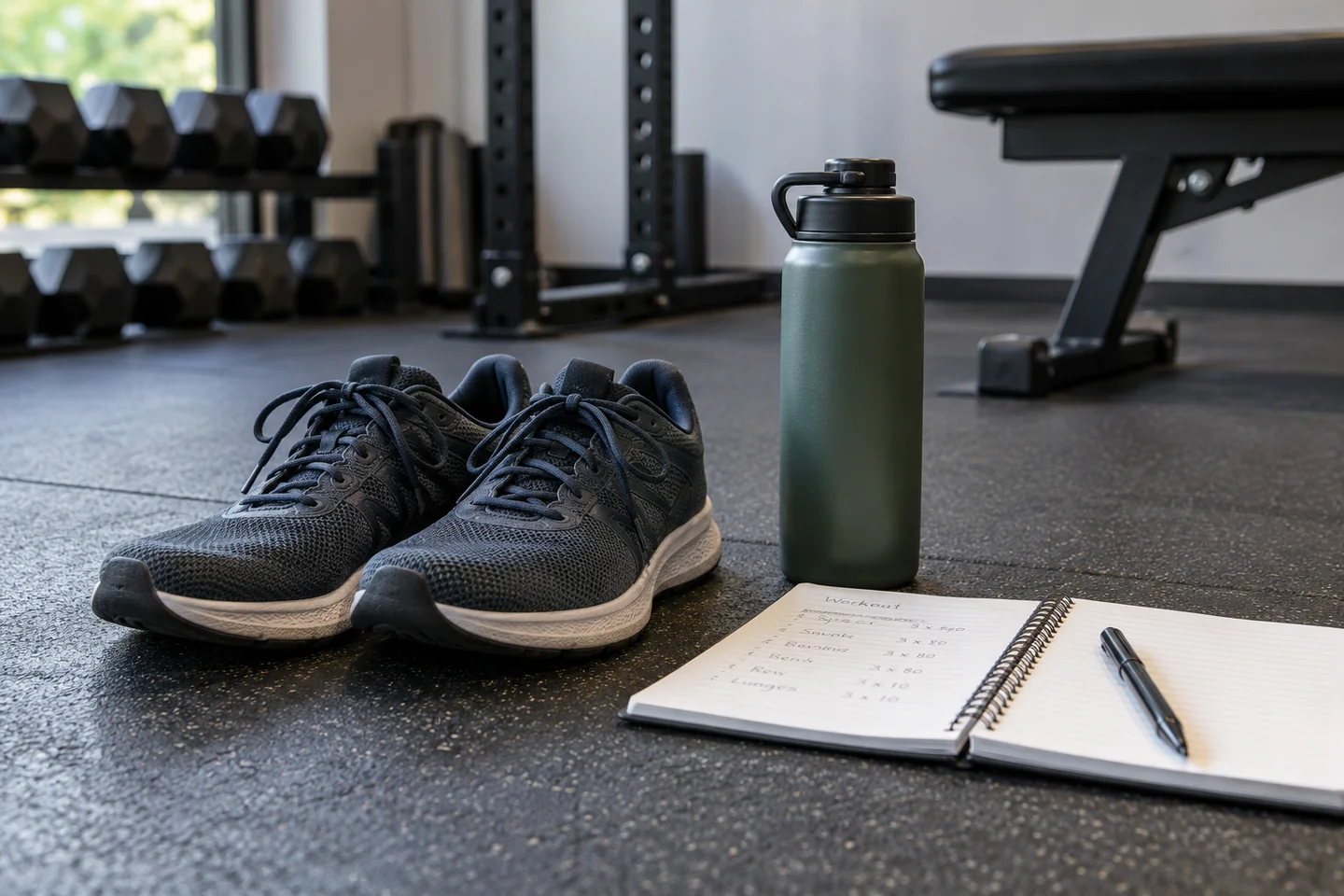
There is no prize for keeping a programme unchanged forever, just as there is no prize for collecting new workouts. The useful question is whether the repeated work remains understandable, suitable and possible to carry out. A familiar session that still serves its purpose can be worth another page in the notebook.