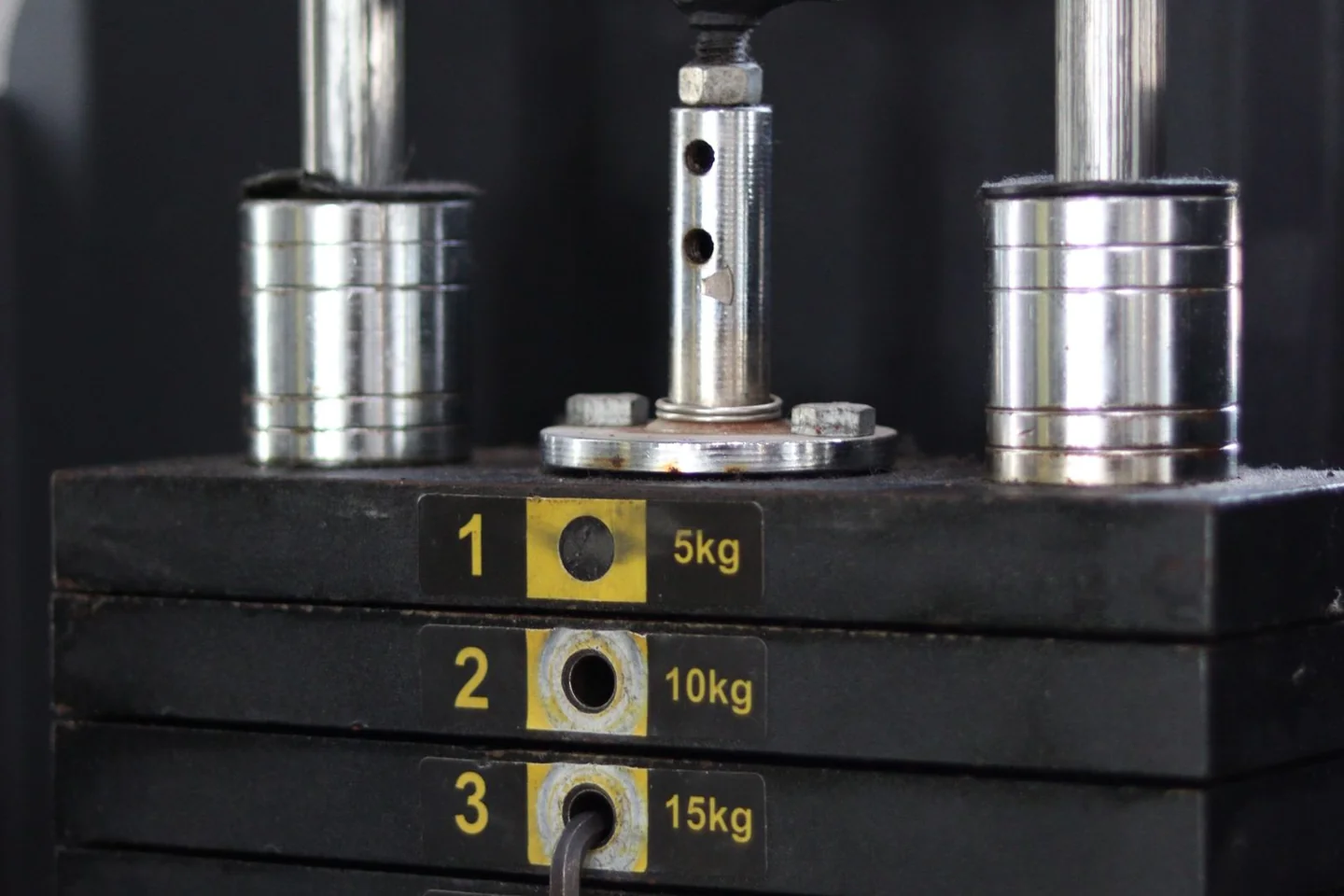
Compare the same arrangement
Two machines labelled chest press can have different mechanisms, angles and starting positions. Their displayed numbers may therefore feel quite different. Treat a move to another model as a new reference point rather than trying to reproduce a previous number immediately.
Even within one machine, a changed seat or handle arrangement can affect the exercise. Record the setting that has been appropriately established for you. If the setup feels wrong or you are unsure how the machine is intended to be used, ask staff before loading it.
Check the unit and what the label represents. Some stacks display kilograms or pounds; others use numbered levels. A level is not automatically a weight. Write the machine name and the displayed setting without converting something the manufacturer has not described.
Photographs of a machine can help you identify the model if the venue permits them, but keep other people out of the frame. A note of the manufacturer or location may be enough. The aim is to return to the same equipment, not to build a photographic archive of every gym visit.
If the printed markings are worn or unclear, ask staff instead of guessing between adjacent settings. A reliable entry starts with knowing what the equipment displays. Do not compensate for uncertainty by reporting a precise converted weight that the machine itself does not establish.
Understand assistance
On an assisted pull-up or dip machine, a larger selected number may provide more help. That reverses the usual assumption that a larger number always means a harder task. Label assistance clearly in the log.
Read the machine's instructions and have its use explained if it is unfamiliar. How you enter and leave the equipment matters as well as the number on the stack. An apparently simple pin adjustment does not remove the need to understand the whole setup.
Do not compare an assisted-machine figure directly with a bodyweight movement. They are different records. Keeping them separate prevents a tidy spreadsheet from implying a relationship it cannot accurately describe.
Start a new line after a change
If the gym replaces a machine, preserve the old entries but begin a new history for the new model. The same applies when you train at another branch or use hotel equipment. A brief description can be enough to distinguish them later.
Ask for help selecting an appropriate starting resistance on unfamiliar equipment. A familiar number is not a reliable substitute for that judgement. Follow the programme and instruction appropriate to the new setup rather than treating the previous machine's record as a requirement.
When equipment seems faulty, report it and use another suitable option. A sticking stack or damaged adjustment should not become a variable you work around to preserve the day's numbers.
On the same machine, with a comparable setup and movement, the setting is a useful part of a training record. It helps you return to an arrangement and discuss changes over time.
It is less useful as a comparison with another person or another gym. Keep the record local to the equipment and the task. That makes the number more informative, even if it makes it less impressive as a headline.