Clear the heavy pieces first
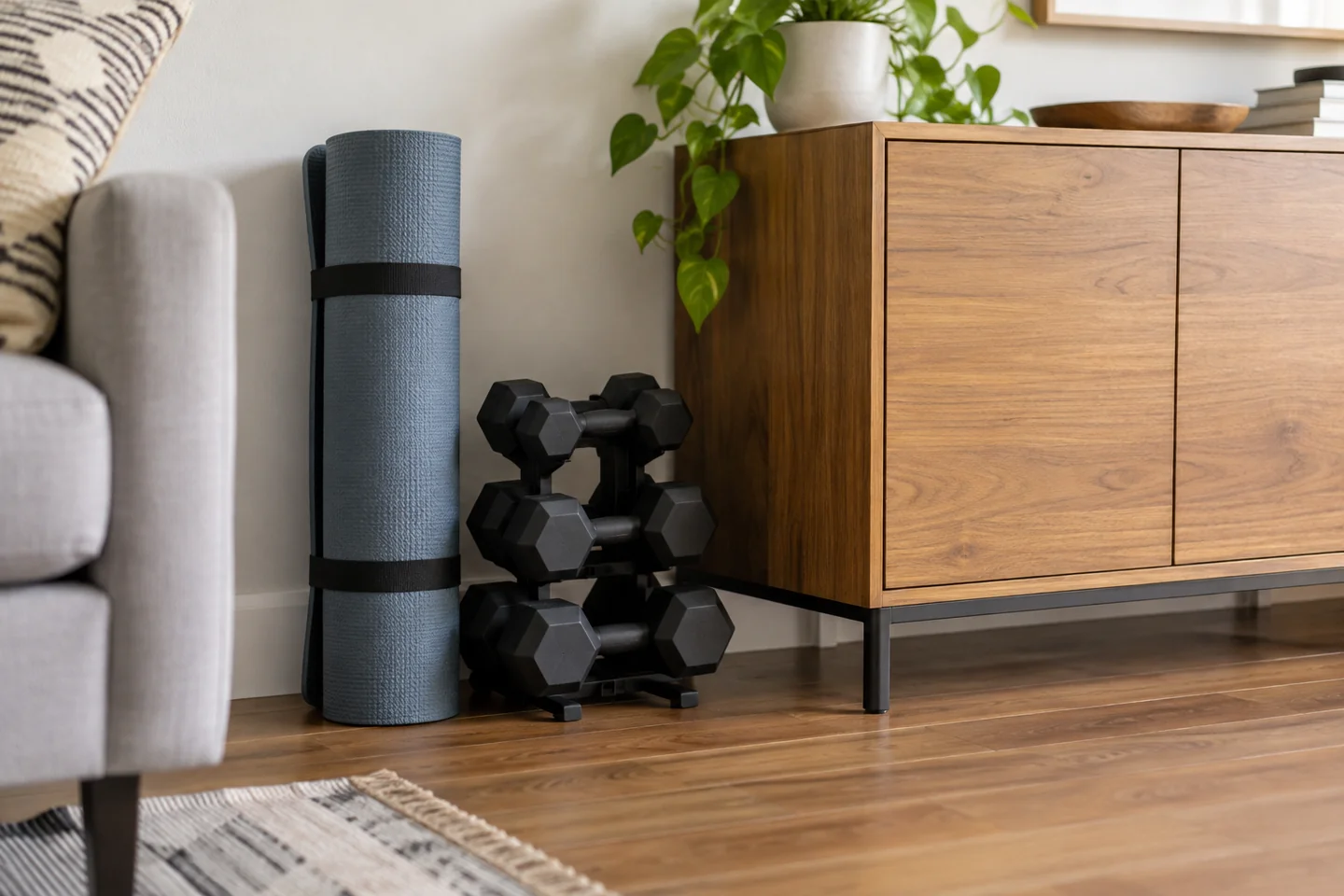
Set weights down securely at the end of the exercise, then return them to suitable storage while the route is clear. Do not move furniture around loose dumbbells and leave them hidden beneath a chair. Keep your hands free for each handling task rather than carrying a weight, mat and bottle together. Switch off and unplug any unused screen charger once its cable is no longer needed.
Check adjustable equipment and loose parts as you put them away. Collars, handles and anchors belong with their kit, while damaged items should be separated from usable equipment. A missing part is easier to notice now than at the beginning of the next session.
Clean and dry surfaces according to their care instructions. If a mat needs time to dry, leave it in an appropriate place that does not obstruct the room, then store it once ready. Do not roll it tightly while wet simply to make the room look finished immediately.
Restore the routes people use
Return furniture without trapping cables or bands underneath it. Check the doorway, the route to the sofa and any area where someone gets up from a chair. A room can look orderly from the entrance while still containing a dumbbell just beyond view.
Collect small objects such as resistance loops, earphones and bottle caps. These are easy to overlook against a dark mat or rug. If children or pets will re-enter, check the floor before removing the barrier you used during exercise.
Keep the next setup in mind without leaving it spread across the room. A consistent storage spot for the mat and frequently used equipment makes tomorrow's preparation easier. You may only need to move one chair each time, but that chair should have a clear temporary place. The aim is a room that works for exercise when needed and for ordinary life afterwards, with neither use leaving an obstacle for the other.