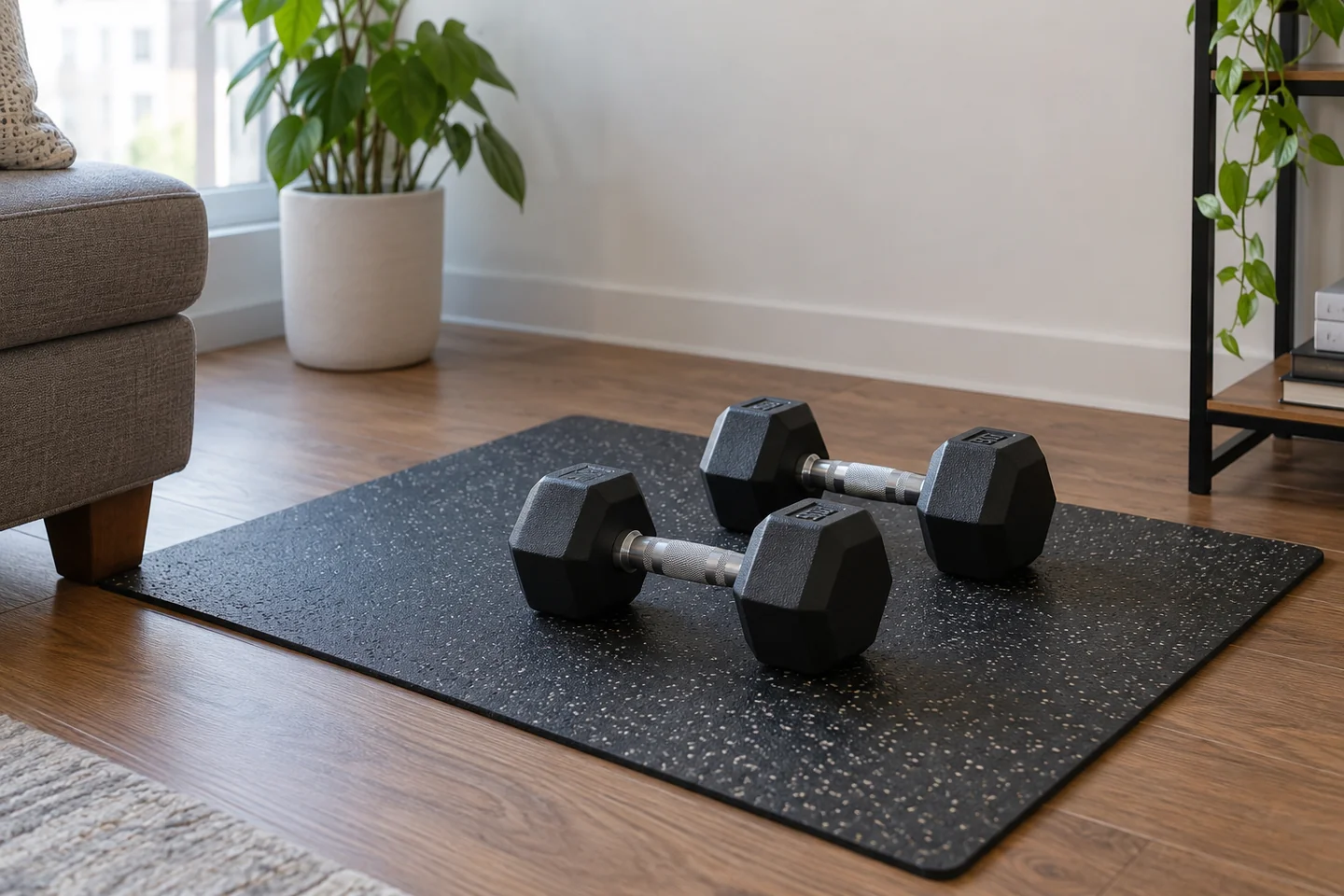
Remove the avoidable impacts
Set weights down deliberately instead of dropping them after the final repetition. Choose a load you can control all the way to its resting place. If you cannot put it down gently, the current setup or effort is not suitable for the room. A thick pad is not permission to release a dumbbell from height.
Give weights a stable landing area that is compatible with the floor and the equipment. Rubber flooring or a purpose-made protective pad may reduce direct contact, but check the product instructions and any floor-care restrictions. Some materials can mark a surface or move on it. Test the arrangement without a heavy load first.
Avoid stacking soft cushions under a weight to absorb sound. They can create an unstable landing and let the implement roll. The aim is a controlled, predictable place to set it down, not an improvised crash pad in a living room.
Think about the building
Sound and vibration travel differently through different floors. A session that seems quiet in your room may still be noticeable below. If you share a building, choose considerate times and talk to neighbours or household members when appropriate. Do not assume that a product advertised as soundproof will eliminate all transmission.
Jumping and rapid stepping add a different kind of impact from controlled strength movements. If your room or neighbours cannot accommodate those activities, use a suitable alternative you know or another location. The decision should fit the building rather than relying on increasingly thick layers of foam.
Check whether loose objects are contributing to noise. A dumbbell rack touching a cabinet, a bottle on a hollow shelf or a bench on an uneven floor can rattle independently of the exercise. Fix the contact or move the object instead of treating every sound as unavoidable.
Keep the surface usable
Protective flooring must still provide stable footing. If it slides, curls or separates under movement, change it. Covering the whole room with soft material can make standing exercises less predictable, especially when equipment feet sink into it.
A short empty-handed rehearsal can reveal noise from the room itself. Walk the intended route and move into the positions without weights. If a floorboard creaks or a bench foot rattles, address that separately from impact noise. Do not add a slippery layer under equipment merely to silence it. Where the building transmits ordinary movement strongly, choosing another room or time may be more useful than buying a thicker mat. Keep expectations realistic about what a removable floor covering can change.
After the session, check for moisture and any new marks beneath removable pads according to the flooring guidance. A setup that protects against impact can still need routine care. Quiet training is a combination of controlled handling, suitable materials and a realistic choice of activity. No single mat can replace those decisions.