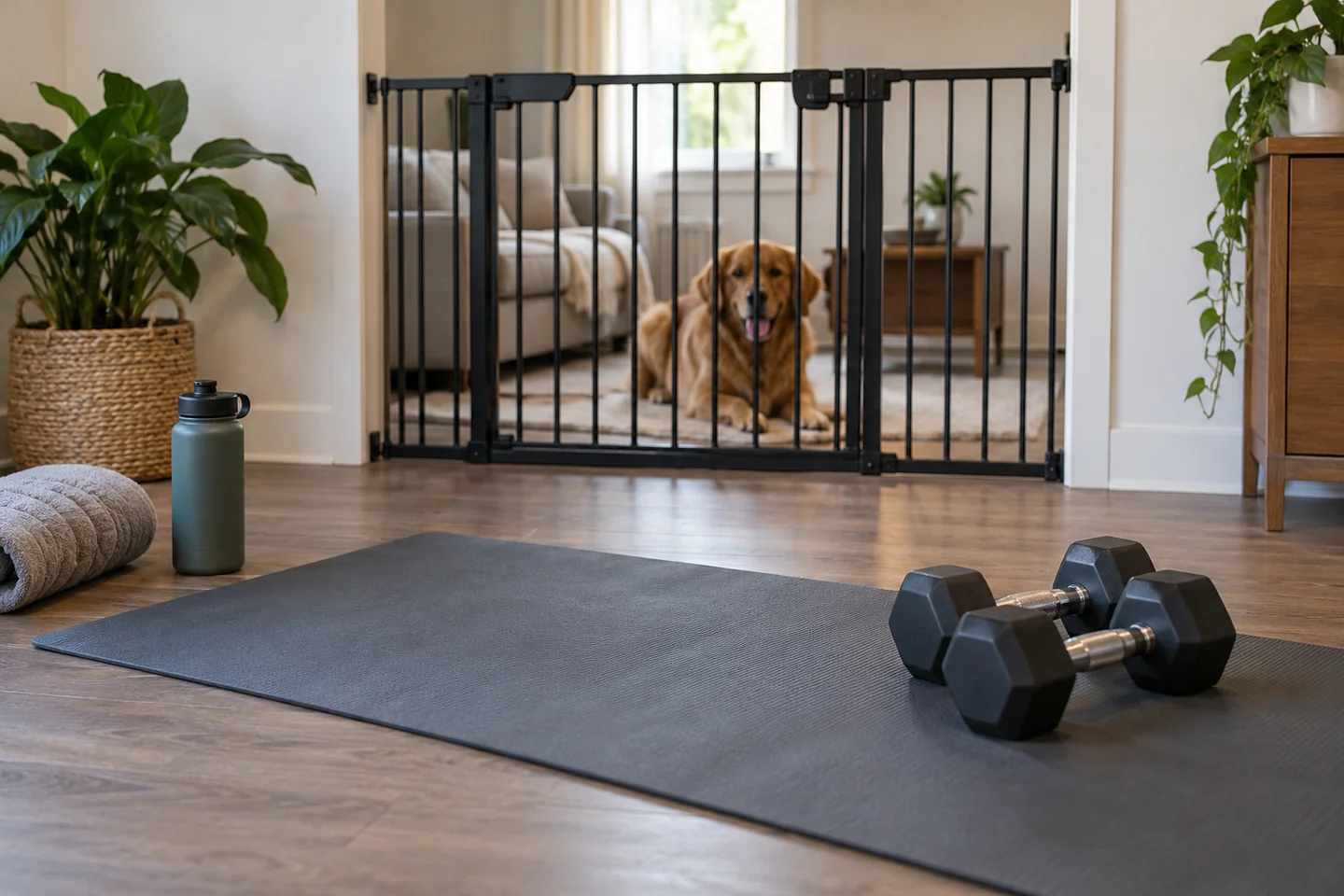
Create a boundary that works in your home
Use a safe room arrangement or appropriate barrier that keeps the pet outside the exercise space without distress. Make sure the animal has what it needs elsewhere, and avoid using exercise equipment as the barrier. A dumbbell across a doorway is a trip hazard, not a pet gate.
Check whether the pet can open, jump or squeeze past the barrier. The arrangement should suit the animal rather than rely on a hopeful instruction to stay. If separation is not workable at that moment, choose an activity and location where unexpected movement can be managed safely.
Keep bands, small parts and straps out of reach. They are equipment rather than toys, and damage from chewing can also make them unsuitable for later exercise. Keep the animal away from the storage area too, particularly if a cupboard or basket is left open during setup. Inspect anything a pet has reached before considering further use; do not assume a small mark is harmless on material that will be under tension.
Plan for an interruption
If the pet enters, stop the movement and put the load down under control before responding. Do not step over or reach around the animal while holding weights. A playful approach can be unpredictable, especially near moving hands or dangling straps.
Avoid arranging the mat next to a favourite route, water bowl or bed when another position is available. Relocating your equipment may be simpler than expecting the pet to understand a temporary change to its usual space.
Afterwards, return all weights and bands to secure storage. A neat-looking mat corner can still leave an elastic loop or collar accessible. Check the floor for small accessories before reopening the room. The boundary only needs to exist for the session, but it should remain in place until the equipment is no longer moving and the tempting loose pieces are put away.