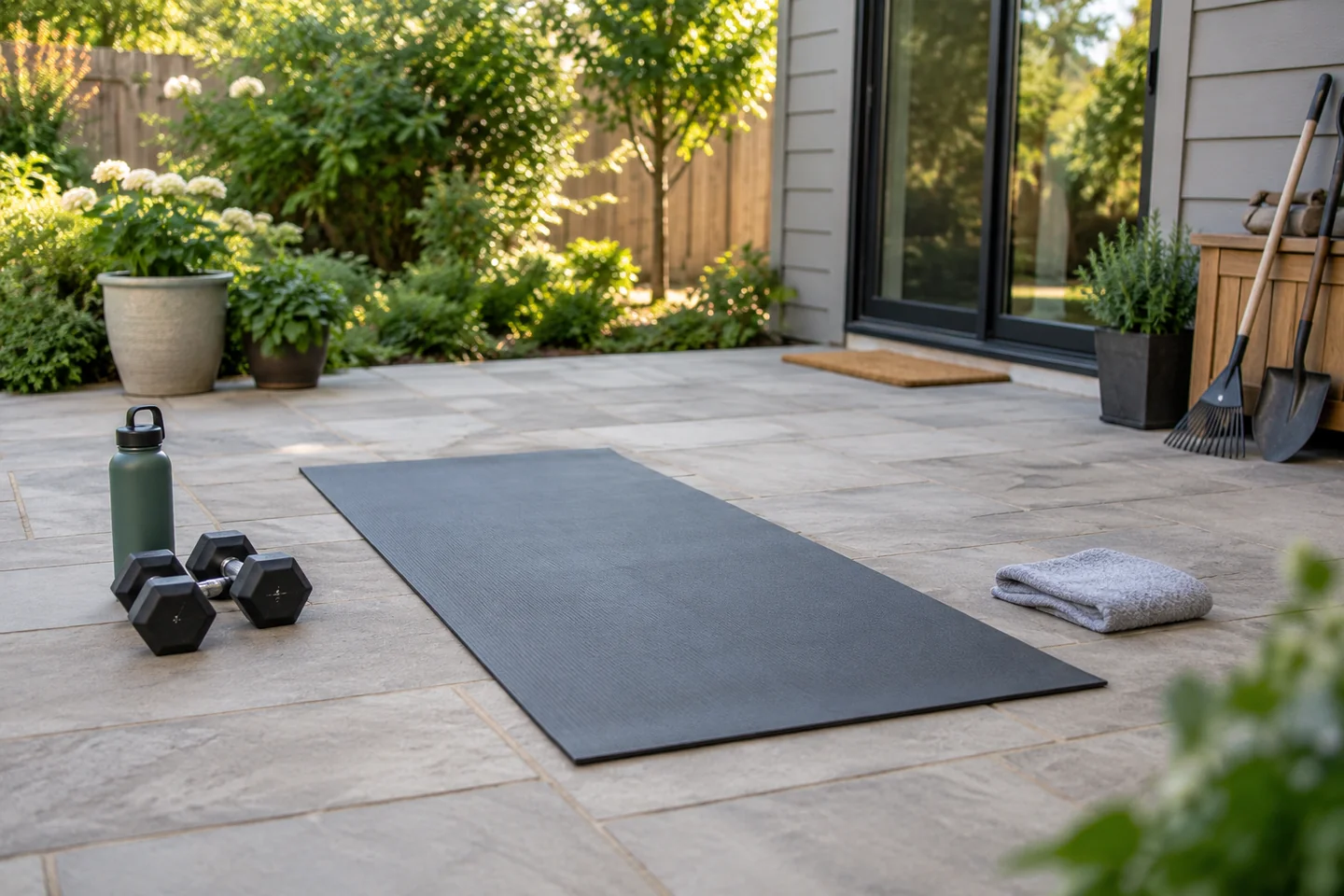
Walk the space before laying out equipment
Look for uneven paving, wet patches, moss, gravel and small objects underfoot. Sweep away debris where appropriate and choose a level area. An exercise mat can cover a surface visually without correcting a raised slab or unstable ground beneath it. Do not use the mat to hide a problem you will still feel during movement.
Check traction in the footwear you intend to use. A patio that seems dry from the door may remain damp in shade. If the surface is slippery or uncertain, move indoors or choose another suitable location. There is no need to force an outdoor session because the equipment has already been carried outside.
Give yourself clear space in every direction the exercise uses. Garden furniture, planters and tools can be close to an outstretched arm or backward step. Rehearse without weights, including getting down to the floor and standing up. Keep the route back into the house clear too.
Consider the equipment, not just the weather forecast
Read whether your equipment is intended for outdoor use. Moisture, grit and sunlight can affect different materials, and a dry day does not make every indoor bench suitable for a patio. Keep adjustment mechanisms clear of debris and avoid placing coated weights on abrasive surfaces that may damage them.
A band should not be looped around an outdoor post merely because it looks solid. The attachment must be approved and free from damaging edges, with the correct arrangement for the product. Trees, fences and garden furniture are not automatically exercise anchors. Choose a permitted setup or leave that movement for another place.
If you use a bench or step, confirm that every foot contacts the surface securely. Paving joints can leave one corner unsupported. Do not correct a rocking bench with a loose stone or folded cloth. Move it to a suitable level area or use a different exercise arrangement.
Keep the session easy to interrupt
Weather can change while you are outside. Have a simple plan to stop and move equipment rather than carrying on through rain because you are midway through a session. Wet handles and a slippery surface alter the setup. Put the load down securely before collecting a phone or trying to move several items at once.
Consider shade, temperature and access to water. Avoid treating heat as an extra training challenge. If conditions make the activity uncomfortable or unsafe, choose a cooler time or an indoor alternative. General exercise advice cannot tell you whether a particular temperature suits your health circumstances.
Keep children and pets away from the moving area just as you would indoors. A garden may have more space but fewer natural boundaries. Check gates and routes before beginning so an unexpected arrival does not put someone beside a moving weight.
Bring the kit back thoughtfully
Follow the care instructions after use. Remove grit and allow equipment to dry as directed before storage. Do not leave a resistance band or mat in direct sun simply to dry faster unless the maker permits it. Check for wear where the surface contacted the ground.
Carry manageable amounts back along the clear route. Wet steps or a door threshold deserve attention while your hands are occupied. It is better to make another trip than to balance a mat, dumbbells and a bottle in one awkward load.
Wind introduces a separate problem for light objects. A towel, instruction sheet or empty mat can move into the working area even when the weights themselves stay put. Put loose items somewhere secure before starting, and avoid using a heavy weight as an improvised hold-down on a delicate strap or band. If you rely on a phone display, keep it on a stable support protected according to its instructions; do not leave it balanced on a garden chair. The extra space outdoors is useful only when the smaller objects remain predictable too.
Think about the time of day when assessing the ground. A patch that is shaded now may be in strong sun later, and a mat can become uncomfortable to touch. Check the actual surface before kneeling or lying down. Choose another location when the ground conditions do not suit the exercise; placing a thin towel over a hot or unsuitable surface is not a general solution.
An outdoor setup can be convenient when the conditions and equipment suit it. Its main difference from an indoor corner is that yesterday's arrangement cannot be assumed today. A brief inspection of the ground, weather and moving space is part of using that extra room well.