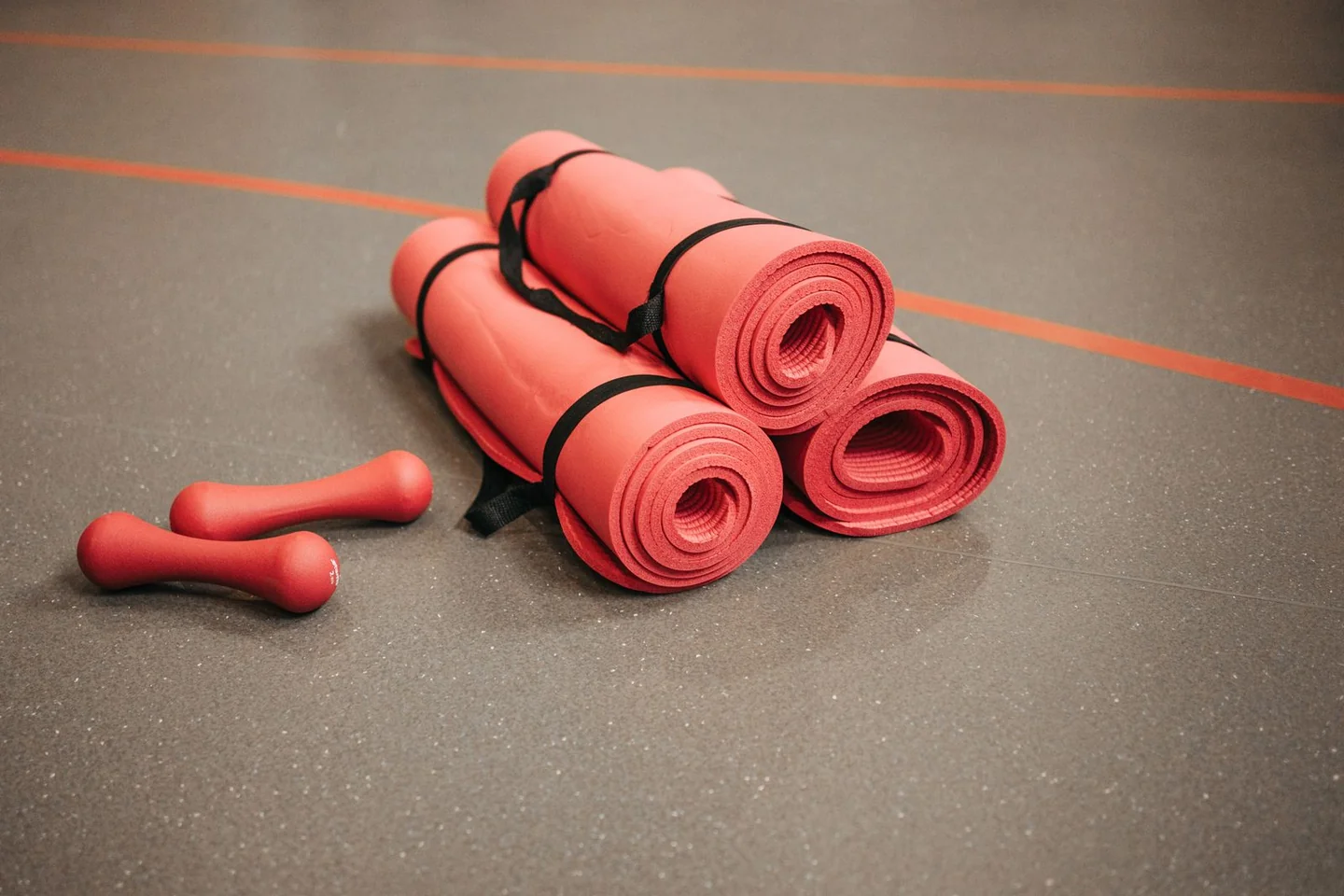
Match the surface to the task
For floor exercises, some cushioning may make contact with the knees, elbows or back more comfortable. For standing movements, a very soft mat can feel less stable under the feet. A thin firm mat and a thick cushioned one therefore serve different needs. If your session mixes tasks, you may prefer to move off the mat for standing work on a suitable nonslip surface.
Check the floor as well as the mat. A mat that grips a smooth studio floor may behave differently on carpet. Lay it flat and test gentle movements before using weights. Curling corners, sliding edges and bunching fabric are reasons to change the arrangement, not details to ignore because the product was sold for exercise.
Length and width matter beyond lying still. Can your hands and feet remain on the intended surface during the exercises you actually do? If you repeatedly step from the mat onto a slippery floor, the transition deserves attention. Measure the moving area rather than buying solely from a photograph of someone standing in the middle.
Plan the ordinary maintenance
Read the material and cleaning directions. Some mats tolerate products that damage others, and washing-machine care is not a universal option. Let the surface dry fully before use or storage according to the instructions. A damp or oily film can change the grip even when the mat looks clean.
Also consider where it will live. A mat that can be unrolled easily is more convenient than one wedged behind heavy furniture. Avoid storing it where a radiator, direct sun or a sharp object may damage it, following the maker's care advice.
You do not need to buy every type before starting. Choose for the exercises you already know, test it on your actual floor and keep the option to use a different surface for another task. A mat is one part of the setup, not a guarantee that the whole room is ready.