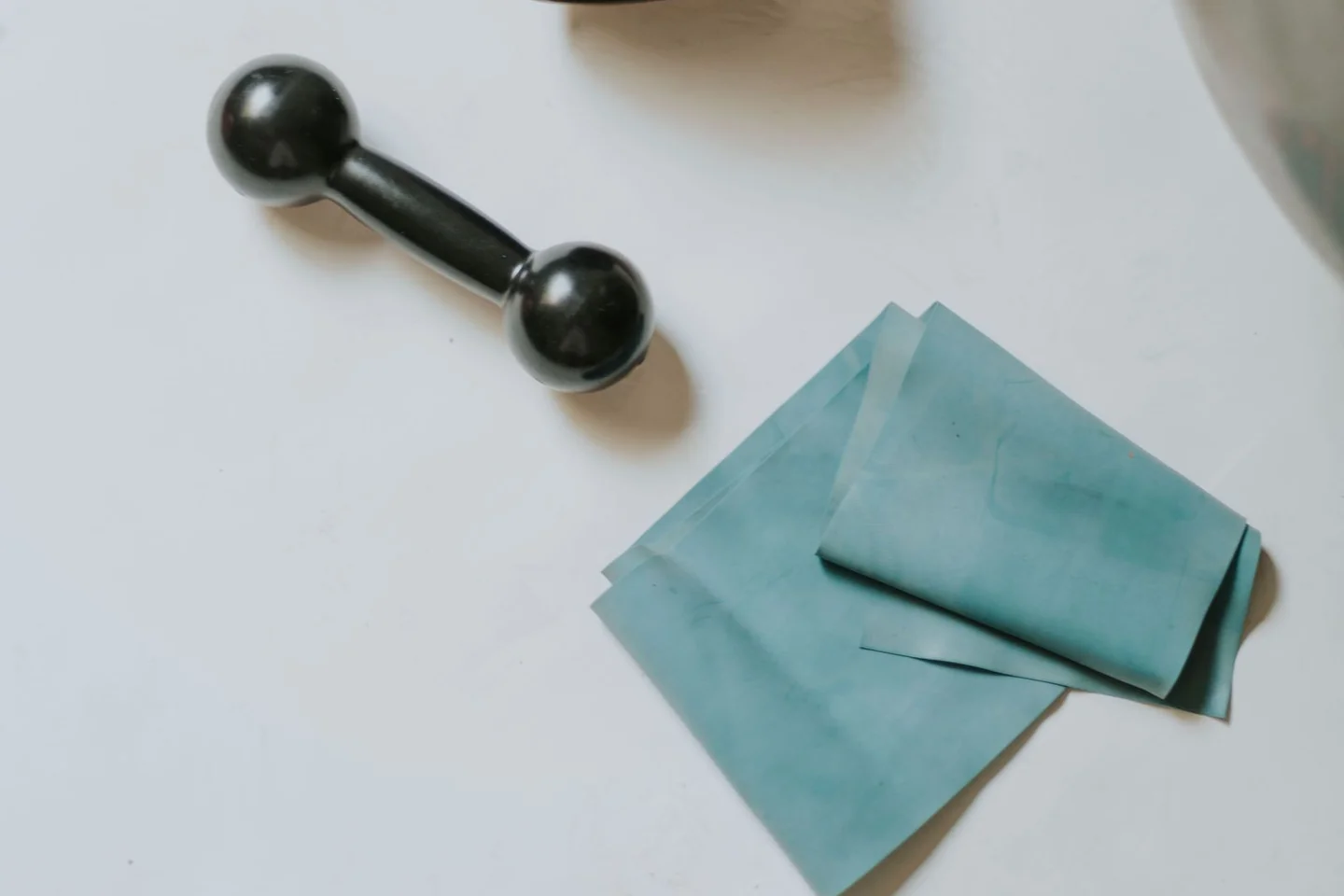
Look along the whole band
Unroll the band before you stand on it or attach it to anything. Look along both surfaces and the edges in good light, rather than inspecting only the part that was visible in the drawer. Small cuts, punctures and worn patches are reasons to stop using it. Check tubing near the handles too, following the manufacturer's instructions for that design. A handle can look tidy while the material immediately beside it has deteriorated.
Do not test a suspicious patch by stretching the band harder. Put damaged equipment aside so it cannot drift back into the next session. A piece of tape is not a repair for resistance equipment under tension. If the band has a product label or care leaflet, keep it: the maker's limits and attachment instructions are more useful than advice intended for a different type of band.
Clear the moving space, not just the mat
Set the band down and rehearse the intended movement without resistance. Your hands may travel well beyond the sides of an exercise mat, and a backward step can reach a coffee table that seemed comfortably distant. Move cables, shoes and loose rugs. Check the space on both sides if the exercise changes arms or legs halfway through. Leave a route for entering and leaving the space without stepping over equipment.
A room can be large enough yet still have the wrong arrangement. A low lampshade above a standing exercise or a door that opens into the practice area is easy to overlook while looking at the floor. Keep children and pets outside the moving area. Arrange the space before beginning rather than trying to watch a doorway throughout a set.
Check the attachment separately
An intact band does not make an improvised anchor reliable. Use only an attachment and setup approved for that product. Furniture legs, door handles and rough railings are not substitutes simply because a band will fit around them. If your exercise requires a door anchor, read its instructions, including the requirements for the door and the direction of pull. When those requirements cannot be met, choose a different exercise setup.
Once the intended setup is in place, check it with gentle tension and controlled movement, as the instructions allow. Keep your face out of the line of pull. Avoid letting the band scrape over a sharp edge or releasing it suddenly at the end of a repetition.
Make the next check easy
Afterwards, inspect the band again and put it away according to its care directions. Give it a consistent home separate from scissors, tools and the feet of heavy furniture. Storing it where you can unroll it easily makes a proper inspection more likely than fishing it from a tangled pile immediately before exercising. Keep replacement equipment clearly separate from anything you have taken out of use.