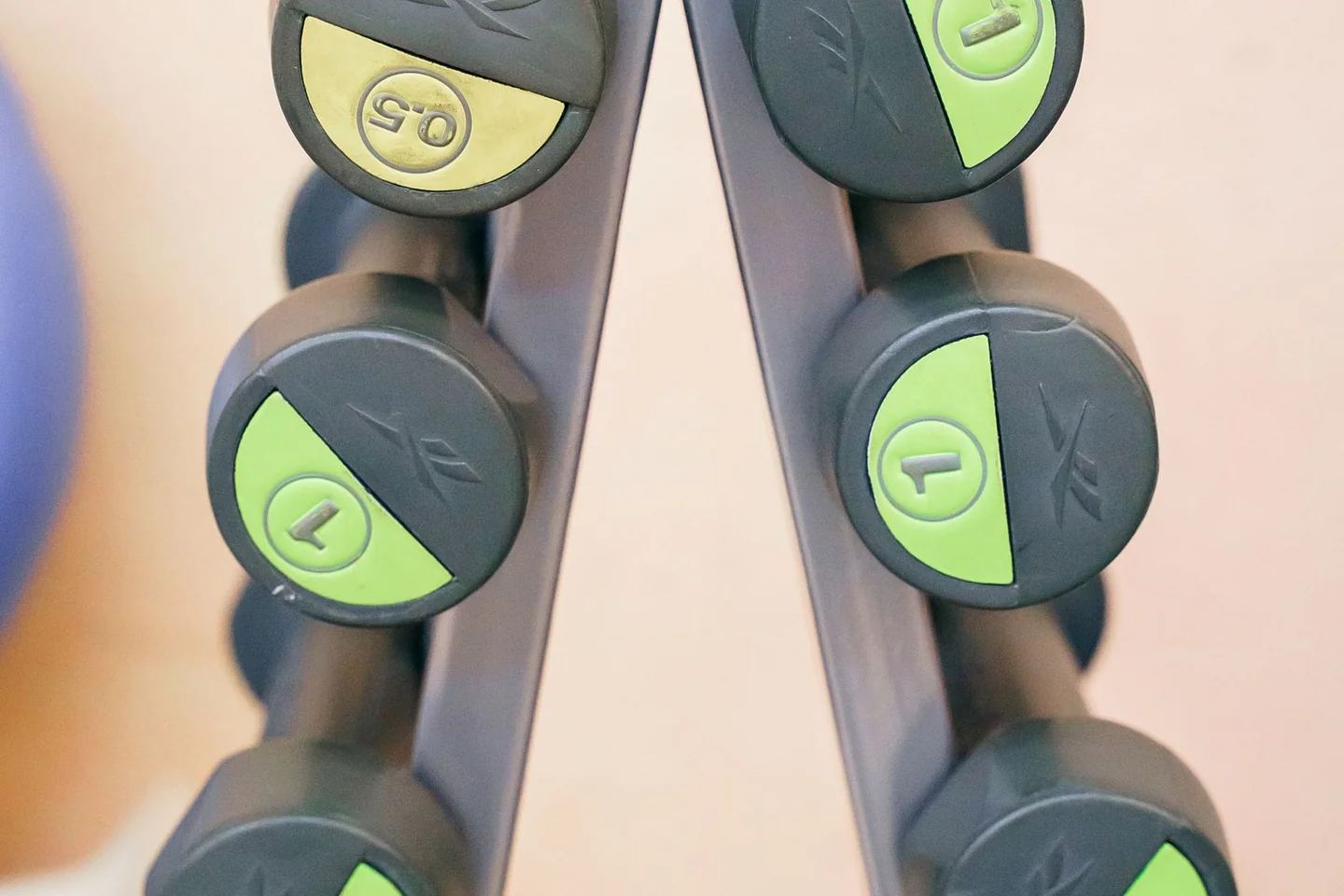
The rack has its own layout
Before picking anything up, look at how the weights are organised. The numbers may run across one shelf or continue onto the shelf below. Check whether the labels use kilograms or pounds. A large-looking dumbbell is not a reliable guide to its mass, and different styles can look surprisingly unlike one another at the same labelled weight.
Match the markings on both dumbbells if you need a pair. An empty slot can mean the item is in use, misplaced or missing; it is not a reason to take a different pair and assume they will feel the same. Ask staff where another set might be rather than searching through someone else's training space.
Give yourself a clear route away from the rack before lifting. Avoid placing a bottle or phone where a weight needs to sit. If you are unsure how to take an item out or return it without trapping your fingers, ask for a demonstration. Rack designs and the available clearance differ.
Step away to use the space
Collecting weights directly in front of the rack and then exercising there blocks everyone behind you. Move to a permitted exercise area with enough room for the movement you have been taught. Keep the space in front of the rack available for collection and return, even when the room is quiet.
Take only the equipment you are currently using. A collection of several pairs around a bench can make a busy room harder to share. If your planned session involves changing weights, speak with the person guiding your training about a workable arrangement instead of reserving half the rack.
Return the pair to its place
Return the pair to its marked place with control, following any local instructions. Do not drop it onto another weight or leave it in an aisle. If the matching slot is occupied by the wrong item, avoid creating a precarious stack; ask staff to help reorganise it. A legible rack makes selecting equipment easier for the next person and for your own next visit.