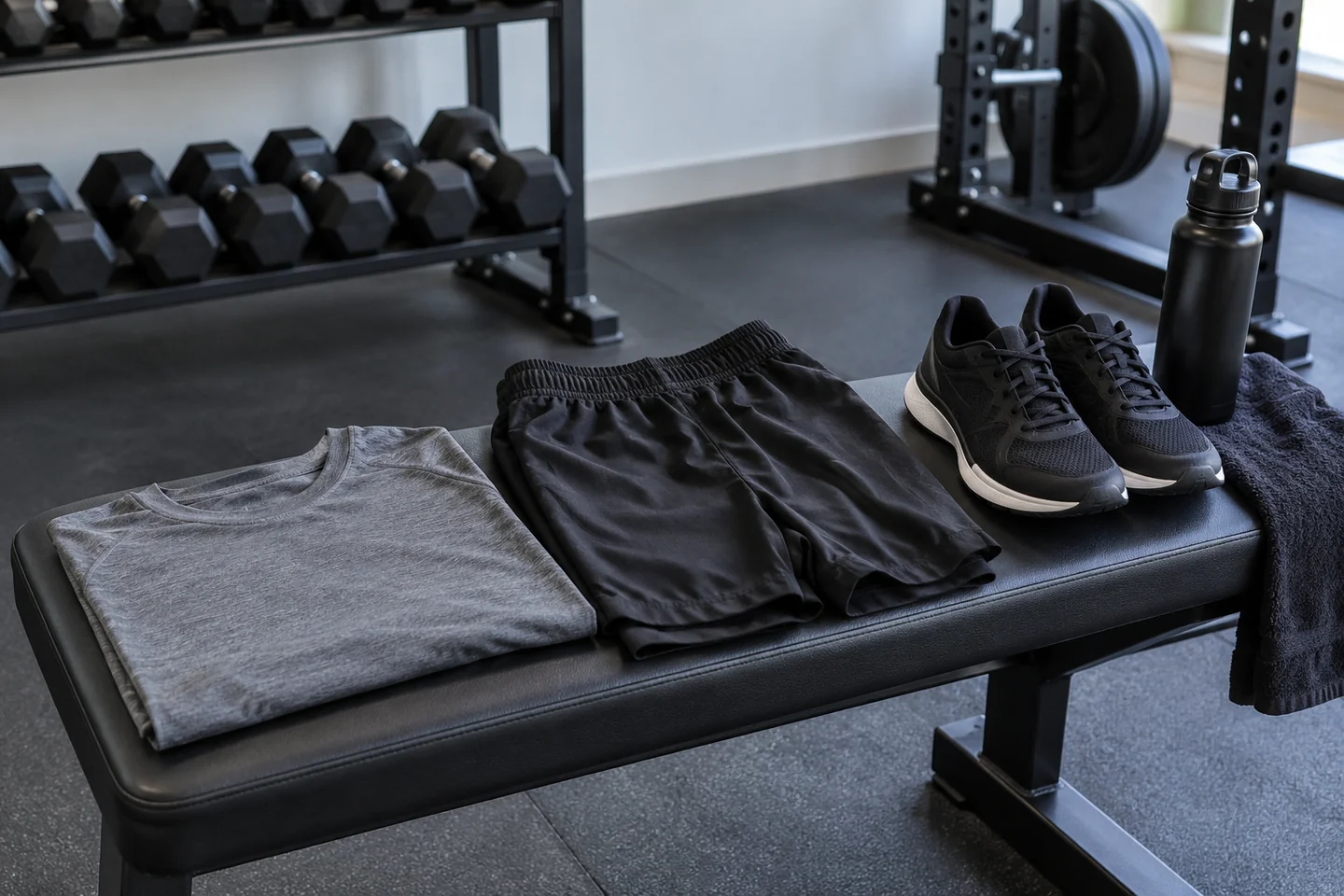
Try the ordinary movements first
Before buying special clothing, see whether what you already own lets you move comfortably. Sit, reach and bend in it at home. Check whether a waistband slips, a seam rubs or a top needs constant adjustment. Clothes that seem fine standing in front of a mirror can become distracting when you sit on a machine or reach overhead.
Choose coverage you are comfortable with in those positions. You do not need to match the clothes worn in promotional photographs. If you prefer a looser layer, consider its length and where it hangs around equipment. Long cords, trailing fabric and loose accessories need particular attention near moving parts.
The equipment matters. Concept2 notes that loose clothing can catch in a rowing machine's rollers. That does not dictate a single outfit for the gym; it illustrates why clothing should be considered alongside the machine. Ask the instructor if you are unsure whether something may catch during the activity you plan to learn.
Footwear is a separate choice
Check the gym's footwear rules before arriving. Bring clean footwear appropriate to the activities you have agreed to do, and ask for guidance where the choice is unclear. A shoe chosen for one activity is not automatically ideal for every other one. Avoid making a purchase based only on a label such as 'training' without considering the intended use.
Make sure laces are secured and the fit does not require repeated adjustment. If shoes have become uncomfortable, stop to sort them out rather than treating the discomfort as something the session must overcome. New shoes are worth trying in a manageable setting before relying on them for a long visit.
Think about the journey as well. Wet outdoor shoes may need changing, and a warm layer can be useful when leaving the building. Keep street and exercise items separate if that helps you avoid bringing water or dirt onto the gym floor. The facility may have its own rules for particular rooms.
Buy in response to an actual problem
After a few visits, you will know what needs improving. A pocket may be too shallow for a locker key, a fabric may stay damp on the journey home or a particular top may restrict an ordinary movement. Those observations make a replacement purchase more precise than buying an entire matching outfit at the start.
Wash and dry clothing according to its care instructions and leave time for it to be ready for the next visit. One reliable set plus a way to keep it clean is more useful than several items you dislike wearing. Comfort, equipment compatibility and the gym's requirements are enough to guide the choice; the outfit does not need to communicate an athletic identity.