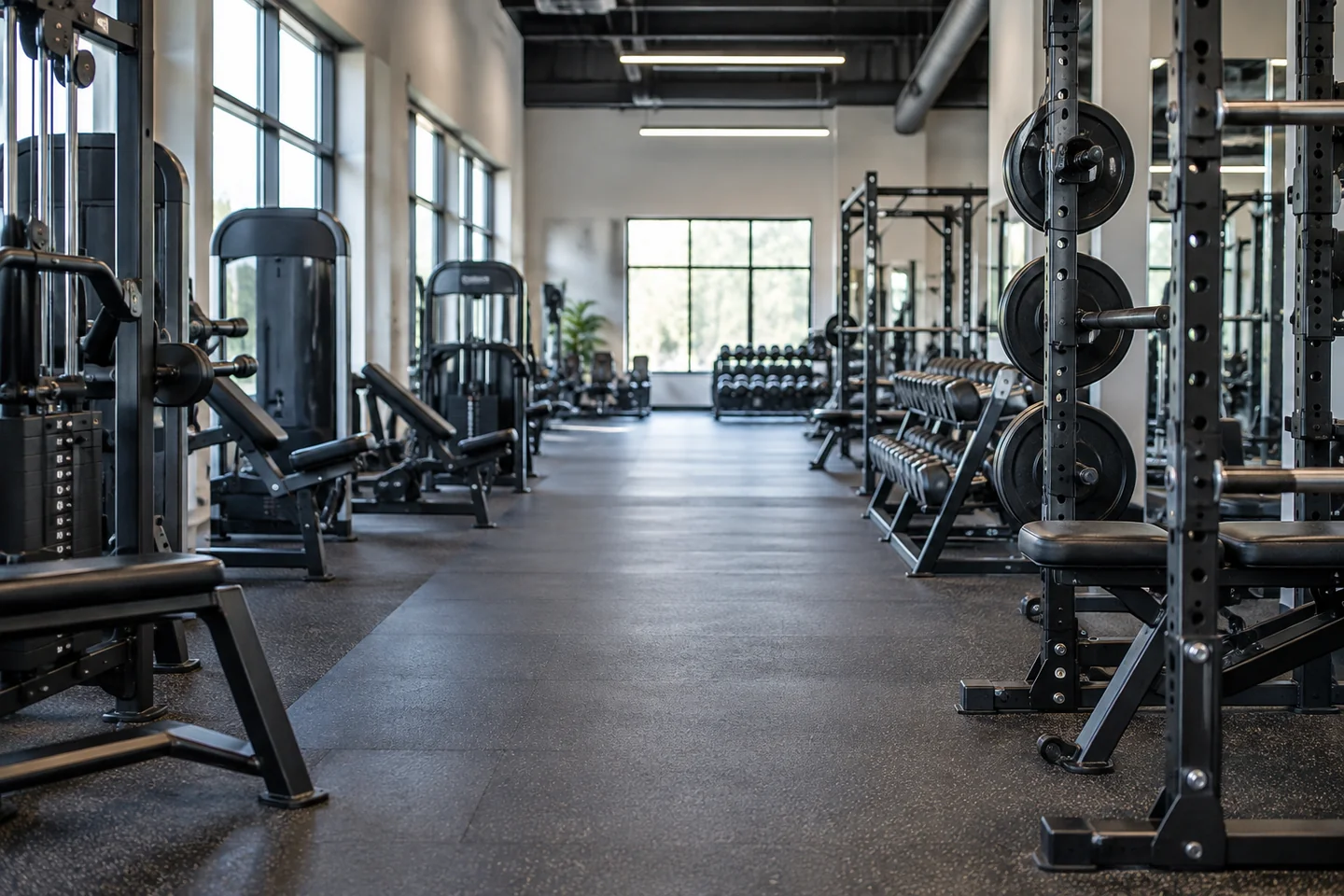
Pause before entering the busiest area
A crowded gym can make a simple plan feel urgent. Take a moment to locate the equipment you need and see which walking routes are clear. Do not stop with a bag in a doorway while trying to work out where to go. Put belongings away first so you can move around without carrying a second obstacle.
Notice where people are actually exercising rather than assuming the space between machines is spare. A cable station, a bench or a mat exercise may need room beyond the equipment's footprint. Give people space to finish before passing close by. If the layout is hard to interpret, ask staff where members should walk.
Noise and movement can make instructions difficult to follow. If you need a new machine demonstrated, ask whether there is a quieter time or a suitable place to talk. Learning an unfamiliar setup while feeling pressure from a queue is not a requirement of belonging in the room.
A quick visual check is also useful when leaving a station. Someone may have moved a bench or placed equipment in the route since you arrived. Turn and look before carrying anything, and wait for a clear space rather than expecting others to step aside. If moving an item requires help, get it; a busy room is a poor place to discover that a piece is more awkward than expected.
Ask about availability once, clearly
When a station is occupied, ask whether it is in use and how much longer the person expects to need it. Wait until they can answer without interrupting a movement. A clear answer helps you decide whether to wait, use another part of your agreed session or ask for an alternative.
Avoid standing immediately beside the person for the whole wait. It can feel pressuring and may block access. Ask where a queue forms if the facility has a system, or keep an eye on the station from an appropriate space. Do not leave your bottle on equipment as a reservation while you use another station elsewhere.
Sharing can work when both people agree and resets are simple, but it is not obligatory. If the arrangement would require repeated complex adjustments, accept that waiting or moving on may be easier. Someone declining to share does not need to become a debate on the gym floor.
Know your alternatives before you need them
Ask the professional guiding your training which substitutions or order changes are appropriate for your plan. That conversation is best held before the room becomes crowded. A spare machine with a similar name may require different setup, and an unfamiliar exercise is not automatically interchangeable with the one written down.
Keep a short note of any alternatives you have actually been taught. If neither the planned station nor its agreed alternative is available, it is reasonable to leave that part for another visit. A session can be imperfect without needing to be rescued by improvisation.
Avoid using another person's space to recreate a missing station. Dragging a bench into a narrow gap or stretching a cable across a route affects everyone around you. Ask staff if equipment needs relocating; the fact that it has wheels does not make every position suitable.
Busy periods also change how much time you need for ordinary tasks. If your visit has a hard end time, decide early what can fit rather than rushing through unfamiliar setup near the end. Equipment adjustments and clear communication still take the time they take.
For example, imagine that the two machines you know are occupied but a third station is empty. The useful question is whether that third station is an alternative you have already learned. If it is not, the empty seat does not make it the obvious next step. You can ask for instruction when staff have time, wait for the familiar equipment or shorten the visit. That decision keeps the session grounded in what you understand instead of letting availability write a new plan for you.
Be easy to read as another user
Keep only the equipment you are currently using around you. A collection of unused pairs of dumbbells can make an area appear unavailable even when most of it is not needed. Return items as you finish and tell someone waiting when the station is free.
If you need to send a long message or take a call, release the equipment and move to a permitted area. A brief look at your training notes is different from occupying a bench while doing unrelated administration. Consider the same information you wanted when you were waiting: is the station in use, and when will it be available?
After a few visits, review whether the crowded period is workable for you. A different half-hour, another day or a more suitable facility may reduce friction. But a busy room does not mean you have to become faster, louder or more competitive. Clear questions, familiar setups and a willingness to leave an unavailable item alone are useful ways to make the space manageable.