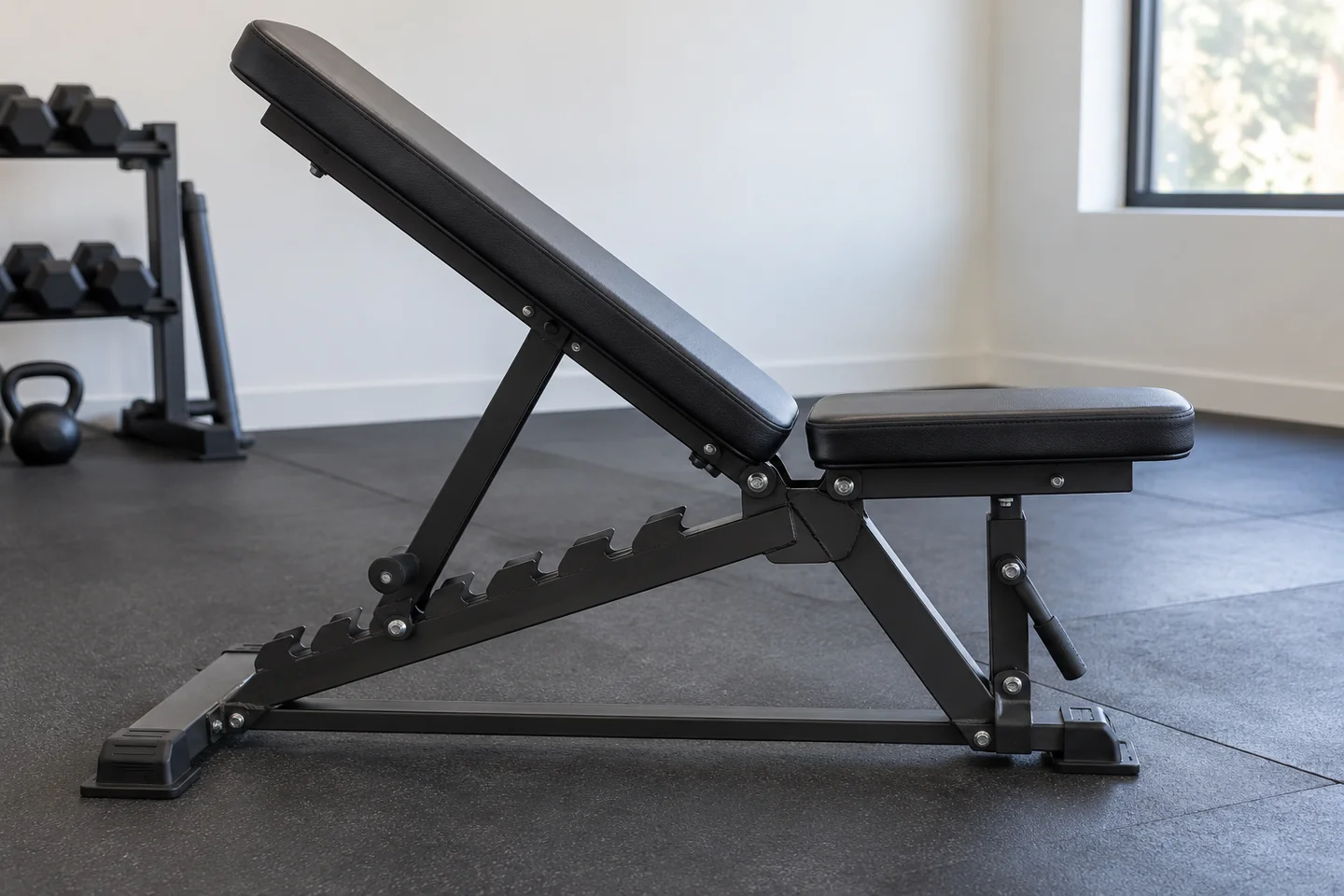
Start with an empty bench
Adjustable benches can look almost identical while using different supports. Some have a ladder of notches behind the back pad; others use a pin or lever. Find the manufacturer's instructions and ask gym staff to demonstrate the actual bench in front of you. Knowing another model does not tell you how this one locks.
Make adjustments without holding weights. Give yourself room to see the mechanism and keep fingers away from hinges and closing gaps. Support the pad as instructed rather than letting it fall. If the setting is difficult to move, do not solve the problem by pulling harder at an unidentified part.
Check that the chosen position is fully engaged in the way the manufacturer specifies. A pad resting near a notch is not the same as a locked setting. The seat may adjust independently, so ask about both sections. Confirm the setup with staff if you cannot tell whether it has engaged.
Keep the surroundings usable
Look at the floor around the bench. It should not be balanced over a loose object, squeezed against another machine or positioned across a walking route. If it needs moving, learn how its transport handle and wheels work. Do not drag an unfamiliar heavy bench into place on your own.
Keep bottles, phones and loose weights out of the adjustment area. A bench gives the impression of spare shelf space, but its underside and moving supports need to remain clear. When sharing, agree who will adjust it and allow time to reset it between users.
If upholstery is torn near a gripping point, a support looks bent or the mechanism will not hold, stop using the bench and report the exact location. Do not test a suspected fault with more weight. Staff can decide how to isolate and assess it. After using a sound bench, follow the gym's cleaning and return-position guidance so the next person has a clear place to begin.